
Prescription prices can feel unpredictable, even when you do “everything right.” I have watched patients carefully follow treatment plans and still end up rationing pills because the cost at the counter was higher than expected. The good news is that there are reliable, repeatable ways to bring costs down without sacrificing safety.
This guide walks you through the options I discuss most often in clinic: comparing prices, using discount cards wisely, asking for generics and therapeutic alternatives, and tapping into manufacturer and nonprofit assistance. Use it like a checklist and keep notes. A few small changes can add up to meaningful savings month after month.

Start here: do not accept the first price
The same medication can vary dramatically in price from one pharmacy to another, even across the street. And your insurance copay is not always the lowest available price. Before you pay, do a quick comparison.
What to do in 5 minutes
- Call 2 to 3 local pharmacies and ask for the cash price for your exact medication, strength, and quantity.
- Check whether they offer a pharmacy savings program (some have low-cost generics lists).
- If you have insurance, get both numbers: your copay and the cash price.
- If your medication is long-term, ask about 90-day fills. They are often cheaper per dose, depending on your plan and pharmacy. Some plans price 90 days as 2.5 to 3 copays or require mail order.
Pro tip: Prices can change with quantity. A 30-day supply might cost more per pill than a 90-day supply, or the opposite. Always compare using the same quantity.
Insurance note: Some plans charge more at out-of-network pharmacies or may not cover them except in limited situations. If you are price shopping, ask: “Is this pharmacy in-network for my plan?”
Use discount cards wisely
Discount cards and coupons can be a legitimate way to reduce out-of-pocket costs, particularly if you are uninsured, have a high deductible, or your medication is not well covered. They are typically processed like a third-party claim (often using BIN and PCN numbers), but they are not insurance coverage and the rules can differ.
One more reality check: discount card prices can change day to day and by pharmacy, so treat them as a quote, not a guarantee.
When discount cards help most
- You are paying cash.
- Your insurance copay is higher than the discounted price.
- The medication is a generic or a common brand with competition.
- You need a one-time fill while coverage is being sorted out.
How to compare discounts
- Check more than one program because each can price differently at different pharmacies.
- Compare the total cost for your specific quantity, not just a “starting at” price.
- Have the pharmacy run both your insurance and the discount card, then choose the lower price.
Two key cautions
- Discount card purchases typically do not count toward your insurance deductible or out-of-pocket maximum. If it matters to you that a purchase counts, ask your plan whether you can submit a claim or receipts for possible reimbursement or credit (it is not common, but it is worth asking). If you use an HSA or FSA, keep itemized receipts.
- Protect your personal information. Use reputable programs, and avoid sharing more data than necessary. If an app requests permissions that feel unrelated to coupons, that is a red flag.

Ask about generics
Generic medications are held to strict FDA standards for quality, strength, purity, and performance. For many conditions, a generic is the single most effective cost-saving move.
What to ask your clinician
- “Is there a generic version of this?”
- “If not, is there a similar medication in the same class that is generic?”
- “Could a different dose or formulation be cheaper but still appropriate?”
When the savings are not straightforward
Sometimes a brand-name coupon can temporarily beat the generic price, or your insurance may prefer one specific product. Also, a few medications have narrow safety margins where switching products should be monitored closely. Examples can include levothyroxine, warfarin, and some anti-seizure medications. If you have concerns, tell your clinician and pharmacist so they can guide you based on your specific medication and condition.
A word on pill splitting
Pill splitting can lower costs in specific situations (for example, when a higher-strength tablet costs the same as a lower strength). Only do this with clinician and pharmacist approval. Some tablets should not be split, including extended-release and enteric-coated products.
Consider therapeutic alternatives
If a medication is costly, the best solution is sometimes a different medication that treats the same condition. In clinic, we call this a therapeutic alternative. It is not “settling.” It is tailoring treatment to what you can realistically access.
Examples that can lower cost
- Switching to a different medication in the same class that is available as a generic.
- Using a once-daily option versus twice-daily, or vice versa, depending on which is covered better.
- Choosing a tablet instead of a capsule, or a different release formulation when clinically appropriate.
Safety note: Never swap medications on your own. Even “similar” drugs can differ in side effects, interactions, or monitoring needs.
Know your insurance rules
If you have insurance, your plan’s formulary (its preferred medication list) heavily influences cost. Many frustrations at the pharmacy come from a mismatch between the prescribed medication and the plan’s rules.
Three terms worth knowing
- Formulary tier: Lower tiers typically cost less. Occasionally a preferred brand can be cheaper than a non-preferred generic because of formulary contracts and rebates built into the plan’s pricing.
- Prior authorization: Your clinician must send information showing why the plan should cover the medication.
- Step therapy: The plan may require trying a lower-cost medication first.
What you can do
- Ask your insurance: “Which tier is this medication, and what are the preferred alternatives?”
- If you are prescribed something expensive, tell your clinic: “Can you prescribe something on my plan’s preferred list?”
- If a prior authorization is needed, request a realistic timeline and ask about a bridge plan (samples, short-term alternative, or a discount fill).
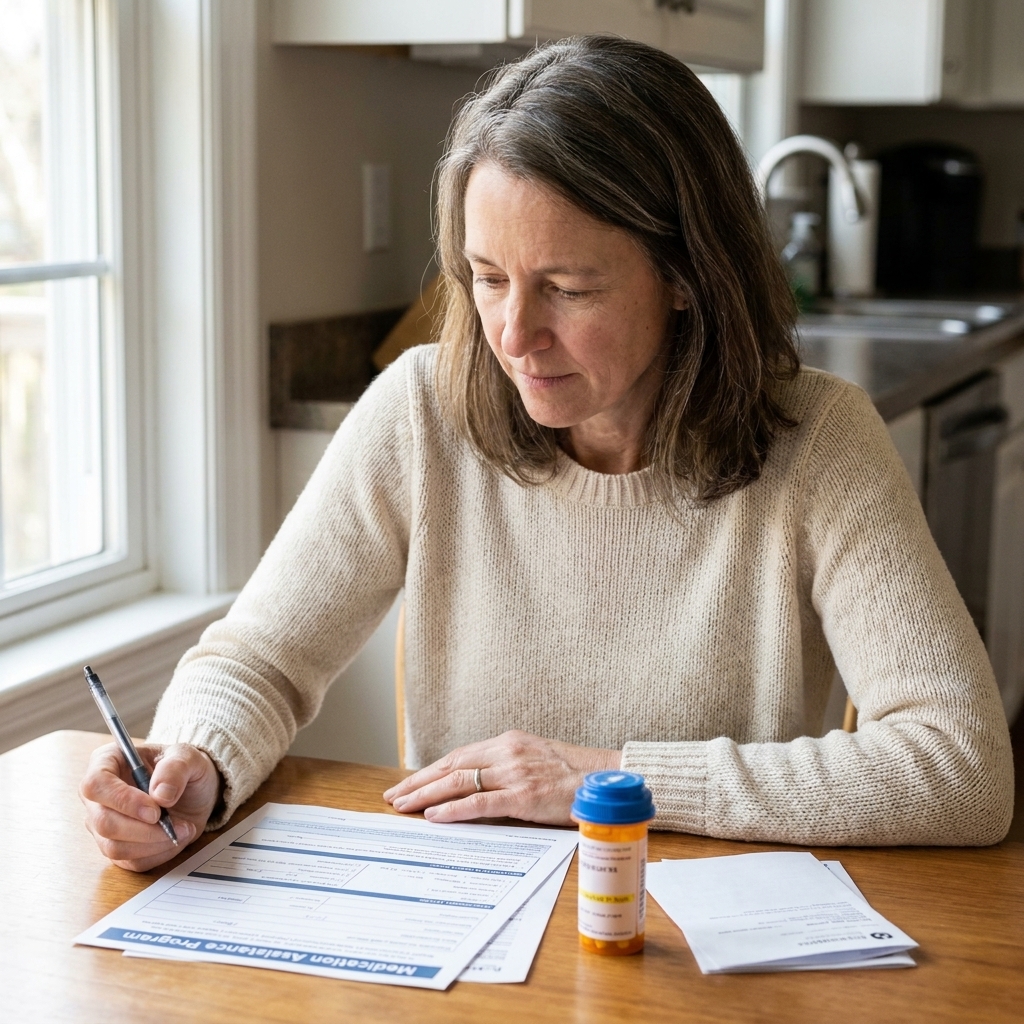
Manufacturer help: copay cards and PAPs
If you take a brand-name medication, check the manufacturer’s website for two common types of help:
- Copay cards (usually for people with commercial insurance). These can reduce your copay, sometimes significantly.
- Patient assistance programs (PAPs) (often for people who are uninsured or underinsured and meet income criteria). Some programs provide the medication at low cost or no cost.
How to apply
- Use the official manufacturer site and look for “patient assistance” or “savings card.”
- Review eligibility requirements carefully (insurance type and income thresholds matter).
- Expect paperwork. Many PAPs require a portion completed by your prescriber.
- Ask your clinic if they have a staff member who helps with prior authorizations and assistance forms.
Important: Many copay cards do not apply to government insurance programs. If you have Medicare or Medicaid, ask about other resources like Extra Help, state programs, or nonprofit assistance.
Nonprofit and community options
If manufacturer help is not an option, there are still avenues to explore:
- State and local programs that help with medication costs for certain conditions or income levels.
- Nonprofit foundations that offer grants for specific diagnoses.
- Community health centers and sliding-scale clinics, which may have lower-cost pharmacy options.
- Mail-order or specialty pharmacies required by some plans, which can sometimes reduce costs for long-term therapies.
If you are not sure where to start, call your clinic and ask if there is a social worker, care coordinator, or patient navigator who can help you locate programs for your situation.
Make the pharmacy team your partner
Pharmacists are one of the most underused resources in cost-saving. A quick conversation can uncover options you did not know existed.
What to say
- “Can you tell me the price with my insurance and the cash price?”
- “Do you see a lower-cost generic or a similar medication used for this?”
- “Would this be cheaper as a 90-day supply for my plan?”
- “Are there any manufacturer savings or pharmacy programs you can apply?”
If the price is higher than last month
- Ask if the pharmacy changed suppliers or if the claim processed differently.
- Confirm the medication name, dose, and quantity match your previous fill.
- Ask if your insurance put the medication on a different tier or if your deductible reset.
Controlled substances and early refills
If your prescription is a controlled substance, pharmacies and insurers may have strict rules about early refills, partial fills, and replacement for lost medication. If cost is the barrier, bring it up early so your prescriber can help you explore safer alternatives and avoid gaps.
When money is tight: stay safe
When cost becomes a crisis, many people try to stretch medication by skipping doses. I understand the impulse, but it can backfire and lead to worsening illness, withdrawal symptoms, or complications.
Better options than rationing
- Call your prescriber promptly and say: “I cannot afford this. What is the safest alternative?”
- Ask if a short-term supply is possible while assistance paperwork is processed.
- Ask whether a lower dose or different formulation is clinically appropriate and less expensive.
- If you use multiple medications, request a medication review to ensure each one is still necessary.
Urgent exception: If your medication is for a condition like seizures, heart rhythm problems, transplant rejection prevention, or insulin-dependent diabetes, do not stop or stretch doses without medical guidance. Call your clinician or pharmacist right away.
Keep these notes handy
A little organization can save you time and money, especially when prior authorizations or assistance programs are involved.
- Photo of your insurance card (front and back).
- Current medication list with doses and pharmacy name.
- Names and dates: who you spoke with at the plan, the pharmacy, and the clinic.
- Prior authorization status and any reference number.
- Itemized receipts if you plan to submit for reimbursement or use HSA or FSA funds.
Quick affordability checklist
- Confirm drug name, strength, and quantity.
- Compare 2 to 3 pharmacies for cash price.
- Run insurance price and at least one discount card price.
- Ask about 90-day supply (and whether mail order is required).
- Ask about generic and therapeutic alternatives.
- Check manufacturer savings and PAP eligibility.
- If denied or too expensive, ask insurer for preferred alternatives and next steps.
FAQ
Is it legal to use a discount card instead of insurance?
In most situations, yes. You can choose to pay cash using a discount program. The main tradeoff is that it typically will not count toward your deductible or out-of-pocket maximum.
Why is the same drug a different price at different pharmacies?
Pharmacies have different purchasing contracts, dispensing fees, and negotiated rates with networks and discount programs. Location and supply can also affect pricing.
Can I ask my doctor to prescribe something cheaper?
Absolutely. In my experience, clinicians want you on a plan you can follow. Saying “I am worried I cannot afford this” is not complaining, it is essential clinical information.
Do generics work as well as brand-name drugs?
For the vast majority of medications, yes. Generics must meet FDA standards for quality and performance. If you have had an issue with a specific generic, tell your pharmacist and clinician so they can troubleshoot safely.
One last note from clinic
If you take only one thing from this guide, let it be this: cost is part of your treatment plan. You deserve medication that is both medically appropriate and financially realistic. Bring the price problem into the open early, and let your healthcare team help you solve it.
Medical disclaimer: This article is for general education and does not replace personalized medical advice. Always talk with your clinician or pharmacist before changing or stopping a medication.