
Opening a medical bill and feeling your stomach drop is more common than you might think. As a family nurse practitioner, I have watched smart, responsible patients get billed for the wrong date, the wrong dose, or even the wrong person. The good news is this: medical billing is complicated, and that means errors can happen. You are allowed to question a bill, ask for proof, and request corrections.
This step-by-step guide walks you through how to audit your charges, identify coding issues, and dispute an incorrect medical bill without getting overwhelmed.
Time-box tip: If this feels like a lot, do one step per day. A calm, steady approach usually beats a marathon phone call.

Before you start: know what you are looking at
Most people receive multiple documents that look like bills. They are not all the same.
- Medical bill (from hospital, clinic, lab, or doctor): This is the provider asking you to pay.
- Explanation of Benefits (EOB) (from your insurance): This is not a bill. It explains what was billed, what the insurer paid or denied, and what they say you may owe.
- Itemized statement: A detailed list of charges, often including service dates, codes, and line-by-line items.
Tip: Your EOB is your roadmap. Many “billing problems” are actually insurance processing problems, and vice versa. You will usually need both the provider’s itemized bill and the insurer’s EOB to spot errors.
One visit can create multiple bills
This is one of the most confusing parts for patients. A single ER visit or surgery can generate separate bills and separate EOBs, such as:
- Facility bill (hospital or surgery center)
- Professional bill (physician or clinician group)
- Anesthesia, radiology, pathology, or ambulance bills
- Lab bills
When you compare paperwork later, make sure you are matching each bill to the correct EOB and date of service.
Step 1: Pause and organize your paperwork
Before you call anyone, give yourself 20 minutes to set up a simple system. This prevents repeat calls, missed deadlines, and “he said, she said” confusion.
Create a mini billing folder
- All bills (front and back)
- All EOBs related to the visit
- Any pre-authorization numbers
- Discharge paperwork, after-visit summary, or procedure report
- Your insurance card (photo is fine)
- A call log with date, time, name, extension, and notes
Protect yourself: If you mail anything, send copies, not originals. If you fax, keep the confirmation page.
Watch deadlines
Insurance appeals have strict time limits, often 30, 60, 90, or 180 days depending on the plan and the situation. Provider billing dispute windows vary too. Check your EOB and your provider’s billing statement for deadlines, and write them on the front of your folder.
Step 2: Compare the bill to the EOB line by line
Start with the basics, because many disputes are resolved right here.
Quick mismatch checklist
- Name and date of birth: Is the bill definitely yours?
- Dates of service: Are you being billed for days you were not seen?
- Provider name and location: Does it match where you were treated?
- What insurance was billed: Is the policy correct? Was it billed as primary vs. secondary?
- Patient responsibility: Does the bill match the EOB’s “you may owe” amount?
If the provider bill shows you owe $2,400 but the EOB says you owe $400, that can be a posting or processing issue, or a bill that went out before insurance finished adjudicating.
Other common explanations include out-of-network processing, noncovered services, a deductible that was applied (or not applied) differently than expected, coordination of benefits issues, or separate facility and professional claims that are being mixed together.
What to do: Ask the billing office to verify claim status, review how payments were posted, and update the account based on the finalized EOB. If a correction is needed, ask whether they should submit a corrected claim or resubmit the claim to insurance.
Step 3: Request an itemized bill and the billing codes
If you only received a summary bill, you are missing the details needed to dispute. Call the billing department and ask for:
- An itemized statement (all line items, quantities, and prices)
- Diagnosis codes (ICD-10)
- Procedure codes (CPT or HCPCS)
- Revenue codes (common on hospital facility bills)
What to say: “I’m reviewing my bill for accuracy. Please send me an itemized statement with CPT/HCPCS, ICD-10, and revenue codes for all charges.”
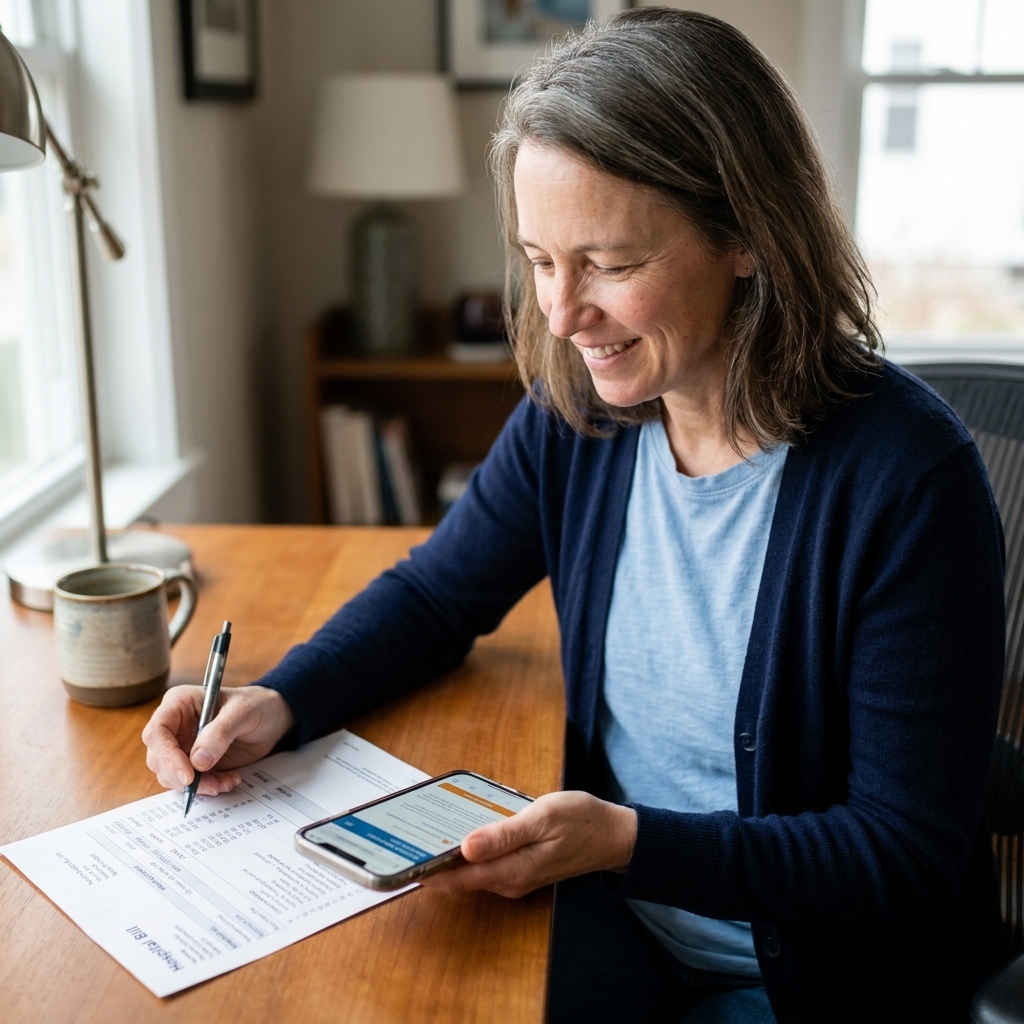
Step 4: Audit your itemized bill for common errors
You do not need to be a coder to find red flags. Look for charges that are impossible, duplicated, or inconsistent with your visit.
Common billing and coding issues to look for
- Duplicate charges: Same medication, lab, supply, or procedure listed twice.
- Wrong quantity: Two crutches billed when you received one, or multiple doses when you received one.
- Cancelled services: Tests or procedures that were ordered but not completed.
- Wrong level of service: A higher complexity visit billed than what occurred. This can happen, and it can also be appropriate, so treat it as a “verify” rather than an accusation.
- Unbundling: Items that should be grouped billed separately, inflating charges.
- Upcoding: A more expensive code billed than the documentation supports.
- Out-of-network surprise charges: Especially from emergency visits, anesthesiology, radiology, pathology, and assistant surgeons. If you are in the U.S., ask whether the federal No Surprises Act protections apply (effective January 2022). State laws can add protections too, so it is worth asking.
- Balance billing problems: Being billed above allowed amounts when protections should apply. In the U.S., this is another place to mention the No Surprises Act for many emergency services and certain nonemergency services at in-network facilities.
- Facility fee confusion: Hospital-owned clinics may charge a facility fee in addition to a professional fee.
Reality check that saves time
Some items look outrageous because of “chargemaster” pricing, but your actual responsibility should be based on your insurance plan’s allowed amount, discounts, and rules. Still, incorrect codes or duplicates can increase your portion, so auditing matters.
Step 5: Gather proof without turning it into a full-time job
If you believe a charge is wrong, your next move is to ask for documentation that supports it.
What to request
- Medical records relevant to the charge: operative report, medication administration record, nursing notes, discharge summary
- Order results: lab results, imaging report, pathology report
- Proof of delivery for durable medical equipment
Tip from clinic life: Ask for the specific record that matches the charge. “Medication administration record for 6/12” gets you farther than “all my records.”
Step 6: Call the right department and use clear language
Medical bills often involve at least two parties: the provider and the insurer. Knowing who can fix what helps you avoid endless transfers.
Who to contact
- Provider billing office: Incorrect line items, duplicates, missing discounts, payment plans, financial assistance, coding review requests.
- Provider coding department (sometimes through billing): Code corrections, documentation review, modifiers, bundling.
- Insurance company: Denials, prior authorization disputes, network status, benefit questions, claim reprocessing, appeals.
Simple script you can adapt
“Hi, I’m calling to dispute part of my bill for the date of service [date]. I’m requesting a review of the following charges: [list]. I have my itemized statement and EOB in front of me. Can you confirm the CPT/HCPCS codes billed and explain why these charges apply? If something was billed in error, I’m asking that it be corrected and submitted appropriately to insurance.”
Golden rule: Stay calm and specific. You can be firm without being hostile. The person on the phone did not create the problem, but they can often help solve it.
Step 7: Put your dispute in writing
Phone calls are useful, but written disputes create a paper trail. After your call, send a short letter or secure message summarizing what you are disputing and what you want done.
What to include in a written dispute
- Your name, date of birth, account number, and date(s) of service
- The specific line items or codes in question
- Why you believe they are incorrect (duplicate, not received, wrong date, denied incorrectly)
- What you are requesting (remove charge, correct code, corrected claim, documentation, account review)
- A deadline for response (for example, 14 to 30 days)
- Copies of the itemized bill and EOB with the disputed lines highlighted
Ask for an account hold: Request that the provider place your account on hold while the dispute is under review, so it is less likely to be sent to collections during the process. Policies vary, so keep monitoring your mail and portal.
Simple letter template
You can copy, paste, and customize this:
Re: Billing dispute for account [ACCOUNT #], date(s) of service [DATE]
To whom it may concern,
I am disputing the following charges on my bill for [DATE]: [list line items, codes, and amounts]. Based on my records and the Explanation of Benefits dated [DATE], I believe these charges are [duplicate/not provided/wrong date/coded incorrectly/processed incorrectly].
Please (1) review and correct my account, (2) provide documentation supporting the disputed charges (such as [specific record]), and (3) submit a corrected claim or otherwise update the balance according to the finalized EOB if applicable.
Please confirm in writing that my account is on hold while this review is in progress and that it will not be sent to collections during the dispute. I would appreciate a written response by [DATE].
Sincerely,
[NAME], [DOB], [PHONE], [ADDRESS]
Step 8: If insurance denied the claim, file an appeal
If the EOB shows a denial and you disagree, appeal through your insurer. Appeals are time-sensitive, so check the deadline on your EOB or member portal.
Common denial reasons and what to do
- “Not medically necessary”: Ask the provider for a letter of medical necessity and supporting clinical notes.
- “No prior authorization”: Request documentation that authorization was obtained, or ask whether an exception applies (especially in emergencies).
- “Out of network”: Ask the insurer to reprocess under any applicable protections for emergency care or lack of in-network options. If you are in the U.S., ask whether the No Surprises Act applies.
- “Coding issue”: Ask the provider to correct and resubmit the claim.
When possible, submit appeals in writing and include the EOB, relevant records, and a brief personal statement about why the service was necessary.
External review: Some plans and situations qualify for an external review after an internal appeal, but availability depends on plan type and jurisdiction. Check your EOB, member handbook, or your insurer’s appeals page for the exact steps.
Step 9: Negotiate if the bill is correct but unaffordable
Sometimes the bill is accurate and still impossible. You still have options.
Ways to lower the cost legally and ethically
- Ask for a prompt-pay discount: Some offices reduce the balance if you can pay a portion quickly.
- Request a financial assistance screening: Many hospitals have charity care or sliding-scale programs, sometimes even for insured patients.
- Ask if they offer an interest-free payment plan: Many providers do, but not all. Also ask whether setup fees or interest can be waived.
- Negotiate based on the allowed amount: If you are uninsured or self-pay, ask for the “insured rate” or “in-network equivalent” discount.
- Separate professional vs. facility bills: You may be able to negotiate each one.
Practical coaching: Tell them what you can pay monthly and ask them to confirm the plan in writing. A realistic plan you stick to is better than a promise that falls apart in two months.
If you are uninsured (do this early)
If you do not have insurance, ask the billing office for:
- A self-pay estimate (and what could change it)
- The self-pay or cash-pay discount
- A financial assistance or charity care application, and the deadline to apply
In many systems, applying for financial assistance earlier can prevent avoidable collection activity and reduce stress.

Step 10: Watch for collections, and know your rights
If a bill is in dispute, request that it not be sent to collections until the review is complete. This is a reasonable request, but it is not a guarantee, because policies vary. Keep a close eye on your mail, portal messages, and any calls you receive.
If you receive a collections notice anyway, do not panic. Respond in writing and request validation of the debt.
Smart protective steps
- Keep copies of your dispute letter and any responses.
- Document every phone call: date, time, name, and what was promised.
- If you pay any portion, note what it applies to (for example, “undisputed charges only”).
- If you resolve an error, ask for a corrected statement showing a zero balance for the removed charges.
Credit reporting note: Rules and timelines around medical debt and credit reporting can change. If this is a concern, check current guidance from the major credit bureaus and your state or national consumer protection resources.
What to do when you are stuck
If you are going in circles, escalate calmly and strategically.
- Ask for a supervisor in billing or claims.
- Request a coding review by the provider’s coding team.
- Ask for a patient advocate or financial counselor (common in hospitals).
- Consider an external review if your plan and situation qualify after an internal appeal.
If the amount is large and complex, some people hire a medical billing advocate. If you do, ask upfront about fees and what they will and will not do.
Red flags that deserve fast attention
- A bill for a visit you did not have
- Charges for services that were clearly refused or cancelled
- A second bill after you already paid in full
- Out-of-network charges after emergency care
- A bill that jumps dramatically after a corrected insurance claim
If any of these apply, start with the itemized bill and EOB comparison, then request an account hold while the issue is investigated.
FAQ
Should I pay the bill while disputing it?
It depends. Many people choose to pay the undisputed portion and dispute the rest. If you do that, clearly state in writing what your payment covers. If you cannot pay anything right now, request an account hold while the dispute is reviewed.
How long does a medical bill dispute take?
Simple posting errors can be fixed in days. Coding reviews, claim corrections, and insurance appeals often take weeks. Ask for an expected timeline and a reference number for your case.
What if the hospital will not give me an itemized bill?
Ask again and document the refusal. Many providers can provide one through the patient portal or mail. If you are repeatedly denied, request to speak with a supervisor or a patient advocate.
Can I dispute a bill after it goes to collections?
Yes. Dispute promptly, request debt validation, and provide copies of your documentation. If your dispute is legitimate, the provider may still be able to pull the account back and correct it.
A closing note from the clinic side
Disputing a medical bill is not being “difficult.” It is being an informed patient. You are asking a complex system to show its work. Take it one step at a time, keep records, and do not be afraid to request a review. Many families save hundreds or thousands of dollars simply by catching duplicates, mismatched insurance processing, or coding errors that slipped through.
If you want, you can share what type of bill you received (ER visit, surgery, lab work, clinic visit) and whether you have insurance. I can help you map out the most efficient next steps.