
When patients ask me how to “boost” their immune system, I often start with the least glamorous answer: sleep. Not supplements. Not a complicated cleanse. Just consistent, restorative rest.
Sleep is one of the times your body does its best behind-the-scenes work. It supports immune coordination, helps keep inflammation in a healthier range, and improves how well you bounce back from daily exposures. The good news is that sleep hygiene is learnable. Think of it as setting the stage so your brain and body can do what they already know how to do.

Why sleep matters for immune function
Your immune system is not just “on” or “off.” It is a complex network that needs the right timing and recovery to work well. Sleep supports that in several ways, and while deep sleep gets a lot of attention, multiple sleep stages contribute.
- Sleep supports immune signaling. During sleep, your body releases and regulates immune messengers called cytokines that help coordinate antiviral responses.
- Sleep can support antibodies and immune memory. In some studies, sleep around the time of infection and vaccination has been linked with better immune “memory” and stronger antibody responses.
- Rest helps calm wear-and-tear inflammation. Poor sleep is associated with higher stress hormones and inflammatory markers, which can leave you feeling run down and more vulnerable.
If you have ever noticed you get sick more easily during a period of chronic poor sleep, that is not in your head. Your biology is keeping score.
Sleep hygiene, explained simply
Sleep hygiene is the set of habits and environment cues that make it easier to fall asleep, stay asleep, and get truly restorative sleep.
It is not about perfection. It is about consistency. Your brain loves patterns, especially around sleep and wake time. A steady rhythm is one of the strongest signals you can give your body.
Step 1: Set an anchor wake-up time
If you only change one thing, make it this: wake up at roughly the same time every day, including weekends. This anchors your circadian rhythm, your internal clock that helps coordinate sleep, hormones, digestion, and daily immune activity.
How to do it
- Pick a wake-up time you can keep within 30 to 60 minutes most days.
- Get out of bed when your alarm goes off, even if your sleep was imperfect.
- Expose your eyes to morning light within the first hour. A walk to the mailbox counts.
Once your wake time is steady, your bedtime often starts to pull earlier naturally within 1 to 2 weeks.
If you are a shift worker, a new parent, or have an unpredictable schedule, do the best you can with a consistent “anchor” point. Even keeping a similar wake time on work days, plus regular light exposure when you wake, can help.
Step 2: Use light to your advantage
Light is a powerful sleep cue. Bright light tells your brain it is daytime. Dim, warm light tells your brain it is time to release melatonin and wind down.
Evening light rules that actually work
- Two hours before bed: dim overhead lights and switch to lamps if possible.
- One hour before bed: reduce screen brightness, enable night mode, or better yet, put screens away.
- During night awakenings: keep lights very low. Bright light at 2 a.m. can shift your internal clock later and make it harder to fall back asleep.

Step 3: Time caffeine and alcohol
Once your light cues are working for you, the next big lever is what you are drinking, and when. I am not here to take away your morning coffee. I am here to help you stop accidentally sabotaging your night.
Caffeine
Caffeine has a long half-life, meaning it can linger in your system for hours. Many people sleep “enough” but get lighter, more fragmented sleep when caffeine is too late in the day.
- Many people do best stopping caffeine 6 to 10 hours before bedtime. If you want a simple start, try 8 hours, then adjust based on how you feel.
- Remember hidden caffeine: black and green tea, energy drinks, pre-workout, some sodas, and even chocolate.
Alcohol
Alcohol can make you sleepy at first, but it commonly fragments sleep later in the night and can reduce REM sleep. It can also worsen snoring and sleep apnea.
- If you drink, aim to finish at least 3 to 4 hours before bed.
- Keep it modest and hydrate. Waking up at 3 a.m. with a racing heart is a common alcohol effect.
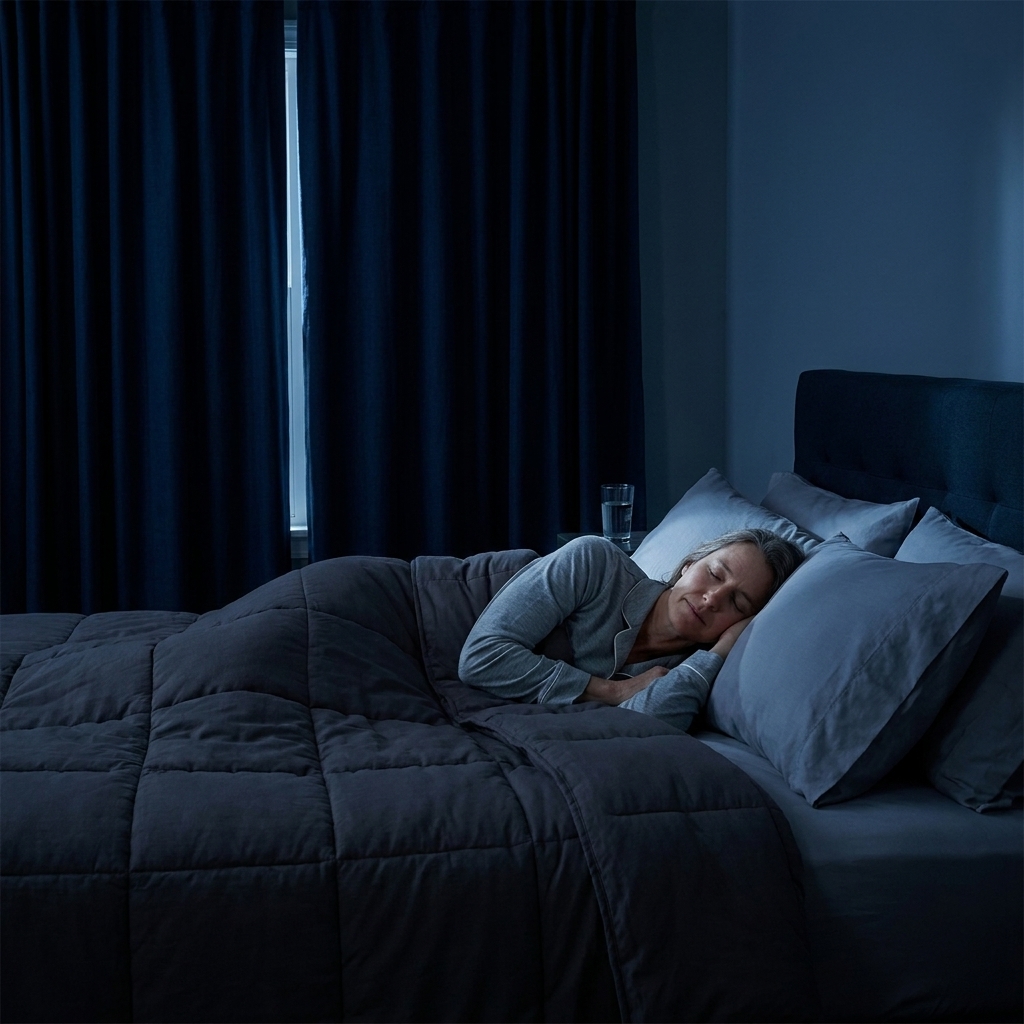
Step 4: Make your bedroom sleep-only
Your brain builds associations fast. If you work, scroll, argue, or watch suspenseful shows in bed, your brain can start treating the bed like an alertness zone instead of a rest zone.
Quick bedroom upgrades
- Cool: Most people sleep best in a slightly cool room. A helpful starting range is about 60 to 67°F, but comfort varies. If you can, aim for the mid-60s.
- Dark: Blackout curtains or a comfortable sleep mask can be game changers.
- Quiet: Consider a white noise machine or fan if sound wakes you.
- Comfort: A supportive pillow and breathable bedding matter more than most people think.
Step 5: Build a 30-minute wind-down
Think of wind-down as a landing strip. You are guiding your nervous system out of the day and into rest. Choose 3 to 5 calming cues and repeat them nightly.
A simple wind-down template
- 10 minutes: prep tomorrow. Set out clothes, pack lunch, write a short to-do list so your brain stops rehearsing it in bed.
- 10 minutes: warm hygiene routine. Shower, wash face, brush teeth. Keep lights low.
- 10 minutes: nervous system downshift. Try one option: reading a paper book, gentle stretching, breathwork, or guided relaxation.
If your mind races, keep a small notebook by the bed. Jot the thought down and tell yourself, “I have captured it, I can return tomorrow.”
One more quiet factor to consider: exercise is generally great for sleep, but very intense late-night workouts can push some people toward a later bedtime. If you are struggling, try moving vigorous exercise earlier and keep late evenings to gentler movement.
Step 6: Use the 20-minute rule
If you are awake and frustrated in bed, your brain can start pairing bed with stress. Here is a kinder approach (this is a highly effective CBT-I technique called stimulus control):
- If you cannot fall asleep within about 20 minutes, get out of bed.
- Go to a dimly lit spot and do something boring and calm: light reading, a simple puzzle, or quiet music.
- Return to bed when you feel sleepy again.
This can feel tedious at first, but it is one of the best ways to retrain the brain to associate bed with sleep.
Common sleep disruptors
Snoring and possible sleep apnea
Loud snoring, gasping, morning headaches, and daytime sleepiness can be signs of obstructive sleep apnea. Untreated sleep apnea stresses the body and is linked with higher cardiovascular risk and impaired immune resilience.
If this sounds like you or a partner has noticed it, talk with your clinician about a sleep evaluation. Treatment can be life-changing.
Nighttime heartburn
- Avoid large meals within 2 to 3 hours of bed.
- Limit trigger foods in the evening, often spicy, fatty, peppermint, chocolate, or acidic foods.
- Consider elevating the head of the bed if reflux is frequent.
Hot flashes and night sweats
- Use breathable bedding and moisture-wicking sleepwear.
- Keep a fan nearby and lower the thermostat.
- Discuss persistent symptoms with your healthcare team. There are effective options.
Anxiety at bedtime
If sleep worries are becoming a nightly pattern, you are not alone. Cognitive Behavioral Therapy for Insomnia, called CBT-I, is a gold-standard, evidence-based approach that can help without medication. Many people can access it through a therapist or structured online programs.
If you want a practical place to start, the Society of Behavioral Sleep Medicine offers a provider directory that can help you find a clinician trained in CBT-I. Some people also use evidence-based digital CBT-I programs when in-person care is not available.
Medications that can interfere with sleep
If your sleep changed after starting a new medication, bring it up. Common culprits include steroids, some decongestants, and certain ADHD or antidepressant medications. Sometimes the fix is as simple as timing, dose adjustments, or a different option.
A 7-night reset
Here is a gentle plan I often recommend when someone feels overwhelmed and wants a clear starting point.
Nights 1 to 2
- Pick your wake-up time and stick to it.
- Dim lights one hour before bed.
- Choose one wind-down activity, like reading or stretching.
Nights 3 to 4
- Move caffeine earlier by 1 to 2 hours.
- Keep the bedroom cool and dark.
- Put your phone on a charger outside the bed, ideally across the room.
Nights 5 to 7
- Lock in a consistent bedtime window.
- Use the 20-minute rule if you are stuck awake.
- Get 10 minutes of morning light exposure daily.
Progress usually shows up as fewer awakenings, easier sleep onset, and better energy and mood during the day. Immune support is a quieter win, but it matters.
When to check in with a clinician
Sleep hygiene is powerful, but it is not a substitute for evaluation when something else is going on. Talk with a clinician if you have:
- Insomnia more than 3 nights per week for longer than 3 months
- Symptoms of sleep apnea: loud snoring, choking or gasping, significant daytime sleepiness
- Restless legs sensations that delay sleep
- Depression symptoms, panic, or severe anxiety
- New sleep trouble after starting a medication
You deserve support. Sleep is not a luxury, it is a health foundation.
FAQ
How many hours of sleep do I need to support immunity?
Most adults do best with 7 to 9 hours. Some people feel great at 7, others need closer to 9. The best target is the amount that leaves you alert and functional most days without relying heavily on caffeine.
Is it true that I can catch up on sleep on weekends?
Extra sleep can help you feel better short-term, but large weekend sleep-ins can shift your body clock and make Sunday night sleep harder. If you need recovery, try a short afternoon nap and keep your wake time within an hour of normal.
Are naps good or bad for restorative sleep?
Naps can be helpful if they are short and timed well. Aim for 10 to 20 minutes, early afternoon. Long or late naps can interfere with falling asleep at night.
Do supplements like melatonin help immune function through better sleep?
Melatonin primarily helps with circadian timing, like jet lag or shift work transitions, rather than acting like a traditional sleeping pill.
If you try it, use a low dose and take it at the right time. If you are pregnant, nursing, on blood thinners, have epilepsy, or have an autoimmune condition, talk with your clinician first. Some clinicians advise extra caution in these situations.
Your next small step
If you are not sure where to begin, choose one habit that feels doable and commit to it for a week. My favorite first step is the anchor wake-up time plus morning light. It is simple, and it sets the whole system up to work better.
Rest is not laziness. It is one of the most practical, evidence-based ways to support your immune function, your mood, your metabolism, and your ability to handle the next day.