Winter has a way of turning “manageable” psoriasis into a stubborn, sore flare. Cold outdoor air is typically drier, and indoor heating lowers humidity, which increases water loss from skin. When the barrier that normally keeps irritants out weakens, the result can be thicker scale, more cracking, and that deep itch that steals sleep.
The good news is that the right topical ingredients can make a noticeable difference. Below are eight ingredient categories commonly recommended by dermatologists, plus a practical winter routine to help you prevent and calm plaques.
Before you start: safety
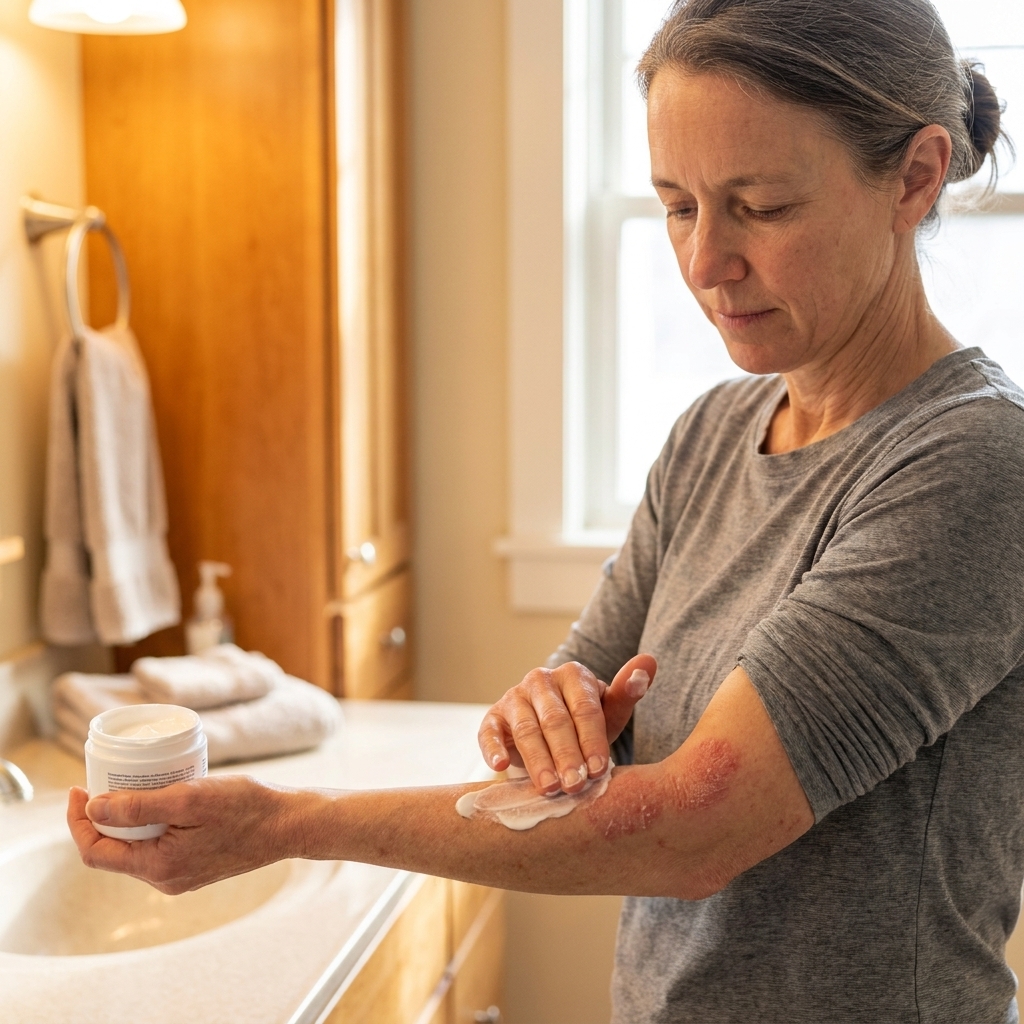
Psoriasis skin is reactive, especially during a flare. Patch-test new products on a small area for a few days. If you are using prescription treatments (like topical steroids, vitamin D analogs, or topical retinoids), ask your clinician or pharmacist how to layer them with over-the-counter products. Occlusion (like gloves, socks, or plastic wrap) can increase medication absorption, so get guidance if you use those techniques with prescriptions.
Get urgent care if you have rapidly spreading redness, fever, severe pain, pus or honey-colored crusting, or swelling that suggests infection.
1) Petrolatum (petroleum jelly)
If you remember one ingredient for winter, make it petrolatum. It is an occlusive, meaning it forms a protective seal that slows water loss. That seal can reduce cracking and help other calming ingredients work better.
Why it helps in winter
- Locks in moisture when indoor heat is drying everything out
- Softens scale and reduces fissures on hands, elbows, and shins
- Often well tolerated because it is fragrance-free and simple
How to use it
- Apply a thin layer over your moisturizer, especially at night.
- For hands and feet, apply petrolatum then wear cotton gloves or socks for 30 to 60 minutes.
2) Ceramides
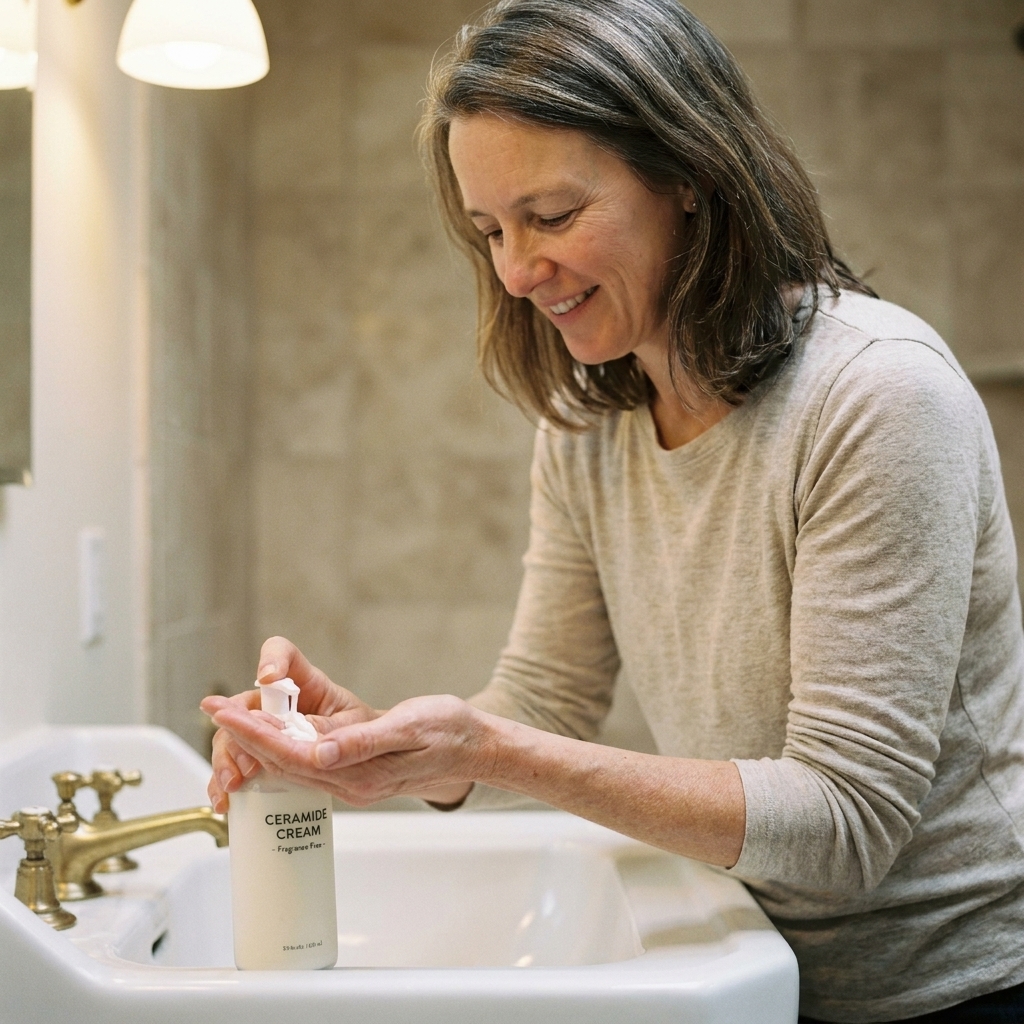
Ceramides are lipids your skin naturally uses to keep the barrier tight. In psoriasis, the barrier is disrupted, and winter makes that gap feel even wider. Ceramide-rich creams help reinforce the “mortar” between skin cells.
What to look for
- “Ceramides” listed on the label, ideally in a cream (not a light lotion)
- Bonus barrier helpers like cholesterol and fatty acids
- Fragrance-free, dye-free options whenever possible
3) Colloidal oatmeal
Colloidal oatmeal is a finely ground oat preparation that can calm itch and support the skin barrier. It is especially helpful when your biggest symptom is “I cannot stop scratching,” which is common in cold months.
Best ways to use it
- As a cream for daily maintenance
- As a short soak or bath treatment, followed immediately by moisturizer
Tip from clinic
Keep baths lukewarm and brief. Hot water feels good in the moment but often worsens dryness and itching afterward.
4) Urea (10% to 20% for most)
Urea is a workhorse for psoriasis scale. It is both a humectant (pulls water into the skin) and a gentle keratolytic (helps loosen thick, built-up scale). In winter plaques, that softening can reduce tightness and help prescription treatments penetrate more evenly.
How to use it without stinging
- Start with lower strengths (around 10%) if your skin is cracked or very inflamed.
- Apply to thick plaques once daily, then increase as tolerated.
- Avoid open fissures, where it can burn.
Note: Higher strengths (around 30% to 40%) exist for very thick scale, but they are more likely to sting and are best used with clinician guidance.
5) Salicylic acid (often 2% OTC)
Salicylic acid is another keratolytic. Think of it as a “scale lifter” that helps flaking skin release. It can be very effective for scalp psoriasis and thick plaques on elbows and knees.
Important cautions
- It can irritate already inflamed skin, so use it on thicker, scaly areas rather than raw, red patches.
- Do not combine multiple exfoliating products at once in winter. More is not better when your barrier is fragile.
- If treating large body areas, using it under occlusion, treating children, or if you have kidney disease, check with a clinician.
6) Lactic acid and ammonium lactate
Lactic acid is an alpha hydroxy acid that gently exfoliates while also helping skin hold water. In psoriasis, it can improve rough texture and scaling when used thoughtfully.
When it is a good fit
- Milder plaques with roughness and flaking
- “Winter ashiness” and dryness around, not directly on, the most inflamed lesions
When to skip it
If your plaques are cracked, bleeding, or burning to the touch, focus first on barrier repair (petrolatum, ceramides, oatmeal). You can add lactic acid later.
7) Niacinamide (vitamin B3)
Niacinamide is a calming ingredient that supports the barrier and can reduce irritation. Many people with psoriasis also deal with sensitive skin from frequent washing, sanitizers, or topical medications. Niacinamide can be a gentle bridge between treatment and comfort.
Where it fits
- In a fragrance-free moisturizer used morning and night
- In a soothing serum under a thicker cream, if your skin tolerates it
8) Dimethicone (skin protectant)
Dimethicone is another barrier-protecting ingredient, often used in “skin protectant” creams. It creates a flexible protective film that helps reduce water loss and friction, which matters in winter when clothing can rub and plaques can catch on fabric.
Helpful uses
- Hands that are washed frequently
- Areas prone to friction (waistband line, inner elbows, under bra straps)
- Layered over a humectant moisturizer for extra protection
A simple winter routine
When people feel overwhelmed, I suggest starting with a routine that is boring but consistent. Psoriasis skin responds well to steady barrier support.
Morning (3 to 5 minutes)
- Cleanse gently: Use a fragrance-free, non-foaming cleanser or just lukewarm water on non-sweaty areas.
- Moisturize right away: Choose a thick cream with ceramides, colloidal oatmeal, and/or niacinamide.
- Seal dry spots: Dab petrolatum or a dimethicone protectant on your worst areas.
After bathing or washing hands
- Pat skin dry, do not rub.
- Apply moisturizer within 3 minutes to trap water in the skin.
- If your hands are a constant problem in winter, keep a small tube of fragrance-free cream or petrolatum by every sink and use it after each wash.
Night (the “repair shift”)
- Target scale if needed: Use urea or salicylic acid on thick plaques (not on cracked skin).
- Use prescriptions as directed: Apply your medicated topical where prescribed.
- Moisturize and seal: Finish with a thick cream and a thin petrolatum layer on top.

Extra winter helpers
- Humidifier: Consider running a humidifier in your bedroom. Many people do well aiming for about 30% to 50% relative humidity. Clean it regularly to reduce mold and bacteria buildup.
- Friction control: Wear soft, breathable layers and avoid scratchy fabrics like wool directly on plaques.
What to avoid in flares
- Fragrance and essential oils: They can sting and trigger irritation on compromised skin.
- Harsh soaps and very hot showers: They strip oils your barrier needs.
- Over-exfoliating: Stacking acids, scrubs, and medicated shampoos can backfire.
- Alcohol-heavy toners or astringents: Often too drying for psoriasis-prone skin.
FAQs
What is the best moisturizer type in winter?
Look for a thick cream or ointment, not a light lotion. Creams with ceramides and colloidal oatmeal are great daily options. If you are very dry or cracking, an ointment base like petrolatum can be a game-changer.
Can I use salicylic acid every day?
Some people can, especially on the scalp or very thick plaques, but many do better starting 2 to 3 times per week and adjusting. If you notice burning, increased redness, or more peeling, scale back and focus on barrier repair for a week.
Do these ingredients replace prescription psoriasis creams?
No. Think of them as supportive care that helps your skin tolerate treatment and stay comfortable between flares. If you are having frequent winter flares, widespread plaques, or symptoms that keep returning, it is worth discussing a personalized plan with a dermatologist or primary care clinician. Some people need prescription topicals, phototherapy, or systemic treatment to control inflammation.
When to see a clinician
Reach out if plaques are spreading quickly, you are developing painful cracks that will not heal, you suspect infection, or your psoriasis is affecting sleep, mood, or daily function. Also mention any new joint pain, morning stiffness, or swollen fingers or toes, as these can be signs of psoriatic arthritis.
You deserve relief, and you deserve a plan that works for your life. Winter is tough on psoriasis, but with the right ingredients and a consistent routine, many flares become more manageable.