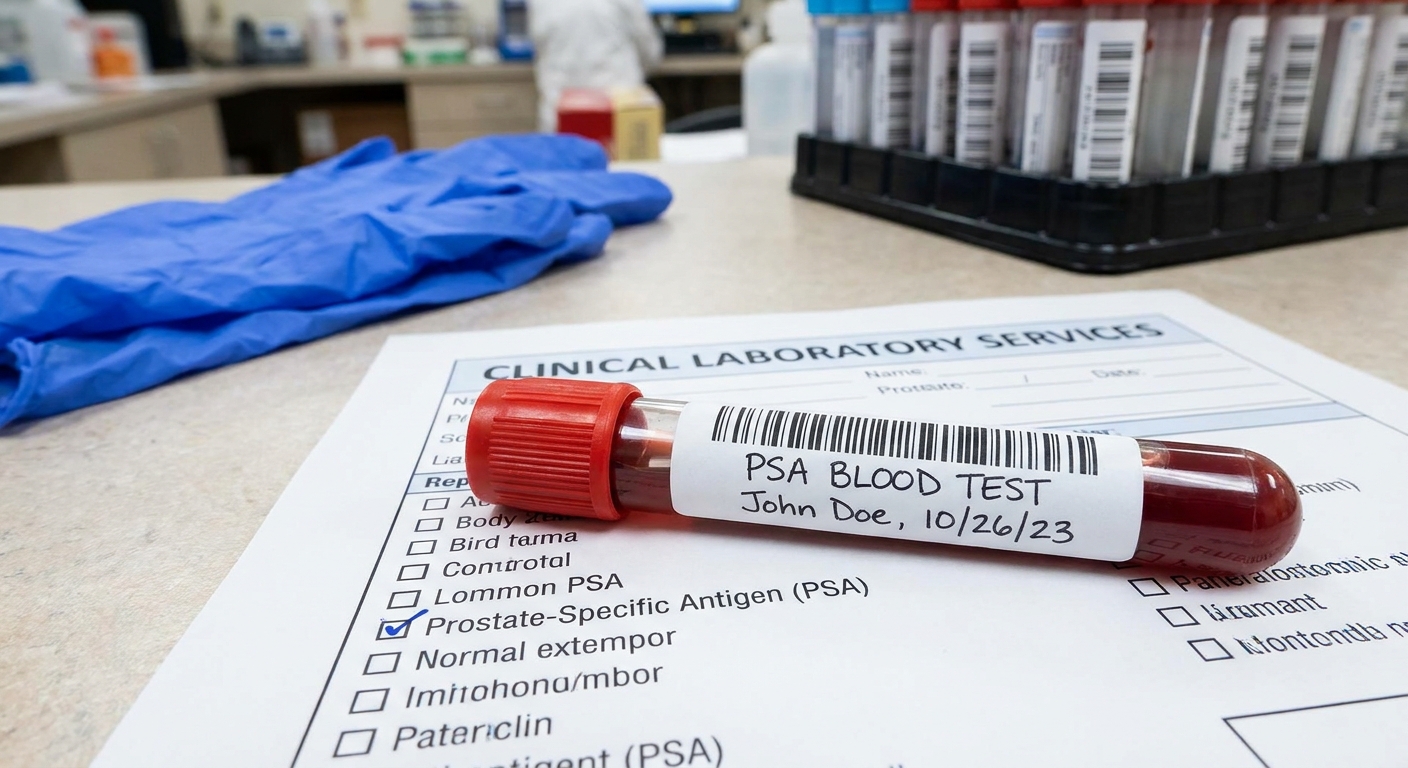
If you have been told you have an elevated PSA, a prostate nodule, or blood in your urine, it is normal for your mind to jump straight to worst-case scenarios. In clinic, I see how heavy that waiting period can feel. The goal of this page is to explain what prostate cancer is, what doctors mean by grade and stage, and how care teams decide between close monitoring and active treatment, all in plain language.
What prostate cancer is
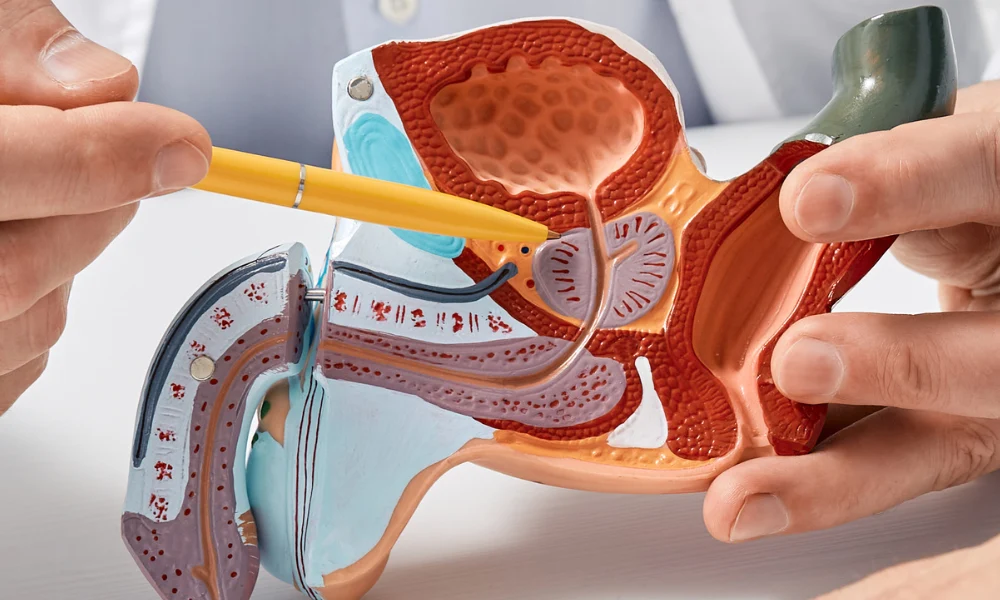
Prostate cancer happens when cells in the prostate gland start growing in an uncontrolled way. The prostate is a small gland below the bladder that helps make semen. Because it sits right around the urethra, changes in the prostate can sometimes affect urination.
The most common type is called adenocarcinoma of the prostate. “Adeno” refers to gland tissue. This cancer starts in the gland cells that produce prostate fluid. There are rarer prostate cancers, but when most clinicians say “prostate cancer,” they mean adenocarcinoma.
Why doctors look for it
Prostate cancer is most often suspected because of:
- Elevated PSA on a blood test
- A nodule or firmness felt on a digital rectal exam (DRE)
Some people are referred to urology because of blood in the urine (hematuria). Hematuria is important to evaluate, but it is more often related to bladder, kidney, stone, infection, medication, or benign prostate bleeding than to early prostate cancer.
It is important to know that none of these findings prove cancer by themselves. PSA can rise for several reasons, including benign enlargement (BPH), inflammation or infection (prostatitis, UTI), urinary retention, recent ejaculation, cycling, and recent urinary tract instrumentation (such as a catheter or cystoscopy). A nodule can be cancer, but it can also be a benign change.

Common symptoms
Many prostate cancers cause no symptoms early on. When symptoms do happen, they often overlap with noncancerous prostate enlargement or other urinary issues.
Possible symptoms
- Blood in the urine or semen
- New trouble starting the urine stream
- Weak stream, stopping and starting, or straining
- Needing to urinate more often, especially at night
- Burning with urination (more often related to infection or inflammation)
- Pelvic discomfort or pressure (nonspecific)
Urgent symptoms
- Inability to urinate
- Heavy bleeding with clots in urine
- Fever, chills, severe burning with urination (possible infection)
- New severe back pain with weakness, numbness, or trouble walking (this is mainly a concern in people with known advanced cancer or other red-flag neurologic symptoms)
If you are seeing blood in your urine, do not assume it is “just” the prostate. Persistent or visible blood should be evaluated.
How it behaves
One confusing truth is that prostate cancer is not one single experience. Some prostate cancers grow so slowly that a person can live their whole life without the cancer ever causing harm. Others are more aggressive and need timely treatment.
That is why your care team focuses on two big questions:
- How aggressive does it look? (This is the idea behind grade.)
- How far has it spread? (This is the idea behind stage.)
How it is diagnosed
Prostate cancer is diagnosed by looking at prostate tissue under a microscope. In practical terms, that usually means a prostate biopsy.
Depending on your situation, your clinician may recommend:
- Prostate MRI to look for areas that seem suspicious
- MRI-targeted biopsy (sampling MRI-identified areas) and often a systematic biopsy (sampling multiple standard areas)
Your pathology report may include how many biopsy cores contain cancer, how much cancer is in those cores, and the cancer’s grade (Gleason score and Grade Group). Those details help your team estimate risk and talk through next steps.
Grade
Grade describes how abnormal the cancer cells look compared to typical prostate gland cells. It helps predict how fast the cancer might grow or spread.
You will often hear about:
- Gleason score
- Grade Group (1 to 5), which is a simpler way to talk about Gleason patterns
Grade in plain language
- Lower grade cancers look more like normal prostate tissue and often grow slowly.
- Higher grade cancers look less like normal tissue and are more likely to grow faster or spread.
Grade is one of the biggest factors in deciding whether “watching” is safe or whether treatment is recommended.
Stage
Stage describes how much cancer there is and where it is located.
Staging usually considers:
- T: how far the tumor extends within the prostate, through the prostate capsule, and into nearby tissues
- N: whether nearby lymph nodes appear involved
- M: whether there is spread (metastasis) to distant areas like bone
Stage in plain language
- Localized: contained within the prostate.
- Locally advanced: extending just outside the prostate or into nearby structures.
- Metastatic: spread to distant lymph nodes, bones, or other organs.
To estimate stage, clinicians may use imaging tests such as MRI of the prostate and, in some situations, specialized scans to look for spread. Increasingly, that can include PSMA PET/CT for selected intermediate and high-risk cases. The right tests depend on your overall risk picture, not just one lab value.

Risk groups
In real life, urology and oncology teams often talk in terms of risk, which blends grade, PSA-related information, exam findings, and imaging results to estimate how likely the cancer is to grow or spread.
You might hear terms like low risk, intermediate risk, or high risk. These categories help guide choices, like whether active surveillance is reasonable or whether treatment should happen sooner.
PSA basics
PSA is not a perfect test, but it can be useful when interpreted in context. In clinic, we often look at PSA beyond a single number, including:
- PSA trend over time (repeat values and how they change)
- PSA density (PSA compared with prostate size, usually from imaging)
- Percent free PSA in selected situations
Which of these apply to you depends on your age, prostate size, medications, urinary symptoms, and other risk factors.
Watching vs treating
If you are newly facing the possibility of prostate cancer, one of the most surprising things you may hear is that not everyone needs immediate treatment. That is not denial or neglect. It can be a carefully chosen plan based on how prostate cancers can behave.
Active surveillance
Active surveillance means monitoring a known prostate cancer that appears low risk, with the intention to treat if it shows signs of becoming more concerning.
Surveillance commonly involves a schedule of follow-up that may include PSA trends, repeat exams, MRI, and a confirmatory biopsy after diagnosis. Many protocols also include periodic repeat biopsies over time. The exact plan is individualized.
Why choose it? To avoid or delay side effects of treatment when the cancer is unlikely to cause harm in the near term.
Watchful waiting
Watchful waiting is different. It is generally a less intensive approach, often used when someone has other major health issues or limited life expectancy where the focus is on treating symptoms if they arise rather than trying to cure the cancer.
When treatment is more likely
Treatment is more commonly advised when the cancer appears more aggressive or more extensive, or when there is evidence it is growing. Other factors include age, overall health, urinary symptoms, personal preferences, and tolerance for potential side effects.
Treatment options
Your urologist or oncology team will tailor recommendations to your grade, stage, risk group, and goals. Here is a high-level view of treatments you may hear about:
Surgery
Radical prostatectomy removes the prostate and usually some nearby tissue. It is often considered when cancer is localized and cure is the goal.
Radiation therapy
Radiation can treat the prostate directly. It may be given as external beam radiation or, in some cases, internal radiation placed in the prostate (brachytherapy). Radiation is used for localized cancer and sometimes for locally advanced disease, often paired with other treatments depending on risk.
Hormone therapy
Prostate cancer cells often use testosterone to grow. Hormone therapy lowers testosterone levels or blocks its effect. For localized disease, hormone therapy is generally not curative by itself, but it is commonly used with radiation for some intermediate and high-risk cancers. For metastatic disease, it is often a core part of treatment.
Other systemic treatments
For more advanced cases, additional medications may be used, including newer hormone-blocking drugs, chemotherapy, targeted treatments, or radiopharmaceuticals. These decisions are highly individualized.
Side effects and questions
Most people’s biggest concerns are completely understandable: urinary leakage, sexual side effects, and bowel changes. The risk depends on the treatment type, the skill and approach of the treating team, your baseline function, and other health conditions.
Questions I like patients to bring to appointments:
- What is the goal of the plan: cure, control, or symptom relief?
- What is my cancer’s grade and stage in plain language?
- Am I a candidate for active surveillance? If not, why?
- What side effects are most common with this option, and which are long-term?
- How might treatment affect urinary control and erections, and what support is available?
- What follow-up schedule will I need?

If you have blood in your urine
Visible blood in urine can be alarming, and it should be evaluated even if it comes and goes. While prostate conditions can contribute to bleeding, blood in urine can also come from the bladder or kidneys.
Depending on your age and risk factors, evaluation may include urine testing, imaging of the urinary tract, and a look inside the bladder with a small camera (cystoscopy). Your clinician will guide what is appropriate for you.
What you can do now
- Write down your timeline: when symptoms started, any blood you have seen, urinary changes, pain, fever, recent vigorous exercise, new medications, or recent catheterization or procedures.
- Bring your records: PSA history over time (if available), prior imaging, medication list, and family history of prostate, breast, ovarian, pancreatic, or colon cancers.
- Ask for clarity: “What are the top causes you are considering for my PSA finding, nodule, or hematuria?”
- Do not suffer in silence: anxiety and sleep loss are common. Tell your clinician if worry is affecting day-to-day life.
FAQ
Does an elevated PSA mean I have prostate cancer?
No. PSA can be elevated for several noncancerous reasons. PSA is best interpreted in context, including your history, exam, and sometimes imaging.
Can prostate cancer cause blood in the urine?
It can, but blood in urine has many causes and is more commonly related to non-prostate cancer causes. Because some causes are serious, it is important to get evaluated rather than assuming the source.
If it is cancer, do I have to treat it right away?
Not always. Some low-risk prostate cancers are safely monitored with active surveillance. Others benefit from treatment sooner. Grade and stage are key to that decision.
What is the difference between grade and stage?
Grade is what the cancer cells look like under a microscope and how aggressive they appear. Stage is where the cancer is located and whether it has spread.
A final word from clinic
If you are in the middle of tests or waiting for next steps, I want you to hear this clearly: you are not expected to make sense of all this alone. Your job is to show up, ask questions, and bring your concerns into the room. Your care team’s job is to explain your specific situation, including grade, stage, and choices, in a way that feels understandable and respectful.
This page is general education, not individualized medical advice. If you have symptoms that feel urgent or you are worried about what you are seeing, contact your clinician or seek prompt care.