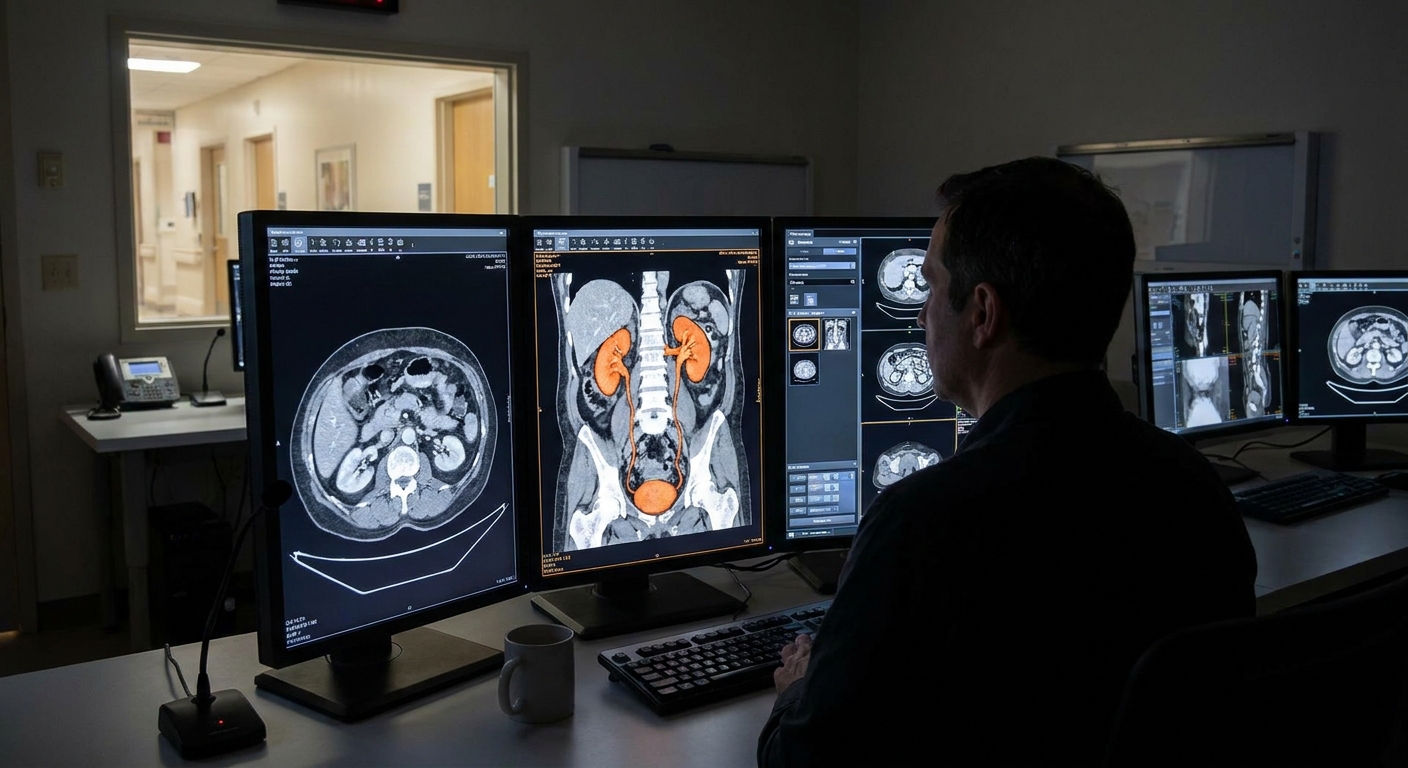
Seeing the phrase “perinephric stranding” on a CT report can feel unsettling, especially if the rest of the wording is hard to interpret. In plain language, it usually means the radiologist saw streaky, hazy changes in the fat around the kidney, a common sign that something has recently irritated the area.
In primary care, I often tell patients to think of the kidney as an orange sitting in a little cushion of fat. When the kidney or the drainage system gets stressed, that “cushion” can look a bit smudged or streaky on CT. That is the “stranding.” It is a finding, not a diagnosis by itself.

What it is
Perinephric means “around the kidney.” Stranding is a radiology term that describes linear streaks or haziness within fat on CT imaging. Fat normally looks dark and uniform on CT. When there is inflammation, edema, pressure, trauma, or other nearby stress, that fat can show increased density (attenuation) and look more streaky.
Perinephric stranding can be:
- Unilateral (around one kidney) or bilateral (around both)
- Mild or more pronounced
- Seen with other findings such as a stone, swelling of the kidney’s collecting system, or signs of infection
The key point is this: perinephric stranding often reflects irritation, inflammation, or edema, but it is nonspecific. The next step is figuring out why, using the CT details plus your symptoms and urine testing.
Common causes
Radiologists see perinephric stranding in several common situations. These are the ones that come up most often in practice.
Kidney stones (especially with blockage)
A kidney stone can cause stranding when it blocks urine flow or irritates the urinary tract. When urine backs up behind a blockage, pressure and inflammation can extend back toward the kidney and into the surrounding fat.
CT may also show:
- A visible stone in the kidney or ureter
- Swelling of the collecting system (hydronephrosis) or ureter (hydroureter)
- Swelling around the ureter
A recently passed stone
One of the most confusing scenarios for patients is when the worst pain has improved, but the CT report still mentions perinephric stranding. That can happen after a stone has already moved through or passed. The kidney and surrounding tissues can stay inflamed for a while even after the immediate blockage is gone.
In this setting, your report might mention:
- Perinephric stranding without a definite obstructing stone
- Minimal or no hydronephrosis
- A “tiny” stone in the bladder or no stone seen at all
This is one reason clinicians interpret the CT together with your symptoms and urine testing, not the scan alone.
Kidney infection (pyelonephritis)
A true kidney infection can cause inflammation in and around the kidney. Perinephric stranding can be one imaging clue, especially when paired with fever, flank pain, and a urine test suggesting infection.
CT may also show:
- Enlargement or swelling of the kidney
- Changes in how the kidney tissue enhances with contrast
- Sometimes a developing fluid collection if infection becomes complicated
Important nuance: perinephric stranding alone does not prove infection. Some people with stones have stranding and no infection. Some people with infection can have subtle imaging findings early on. Symptoms and labs matter.
Trauma or recent procedures
Less commonly, stranding can appear after an injury to the kidney region (for example, a fall or car accident) or after certain urinary procedures. The surrounding fat can look inflamed from tissue irritation or bleeding.
Other causes
Occasionally, stranding is seen with other inflammatory conditions in the abdomen or pelvis that are close enough to irritate the kidney area. More rarely, it can be associated with less common problems such as renal vein thrombosis or systemic fluid shifts. When something more unusual is suspected, the report typically mentions other specific findings to explain the concern.
A key point to keep in mind: the significance of perinephric stranding depends heavily on what else is on the scan (stone, hydronephrosis, abscess, mass) and what you are feeling (pain, fever, urinary symptoms).
What it is not
This is where a lot of anxiety comes from. People see “stranding” and worry it automatically means kidney failure or a dangerous mass. Most of the time, it does not.
Not the same as hydronephrosis
Hydronephrosis means the collecting system inside the kidney is enlarged because urine is not draining normally. That is an internal plumbing issue.
Perinephric stranding refers to fat outside the kidney looking irritated or inflamed. They can occur together, especially with obstructing stones, but they describe different things.
Not the same as a fluid collection
Stranding is a hazy streaky appearance in fat. A fluid collection is a more defined pocket of fluid, which can suggest things like an abscess, urinoma (leaked urine), or hematoma (blood), depending on the scenario.
If a report suspects a fluid collection, it typically uses words like:
- “fluid collection”
- “abscess”
- “urinoma”
- “hematoma”
Those terms often prompt faster follow-up than simple stranding, although urgency still depends on the size of the collection and how sick someone is.
How clinicians read this
When I review imaging results with patients, we zoom out. A CT report is like a list of clues. Perinephric stranding is one clue, and its meaning changes depending on the context.
Questions your clinician is asking
- Do you have symptoms of a stone? Sudden one-sided flank pain, waves of pain, nausea, pain that moves toward the groin.
- Do you have symptoms of infection? Fever, chills, burning with urination, urinary urgency, feeling generally ill, flank pain.
- What does your urinalysis show? Blood suggests stones, white blood cells or nitrites suggest infection, but there can be overlap.
- Is there a stone or hydronephrosis on CT? Those findings help connect the dots.
- Are you high risk? Pregnancy, diabetes, immune suppression, kidney transplant, known kidney disease, or having only one functioning kidney can change the urgency.
The type of CT can matter
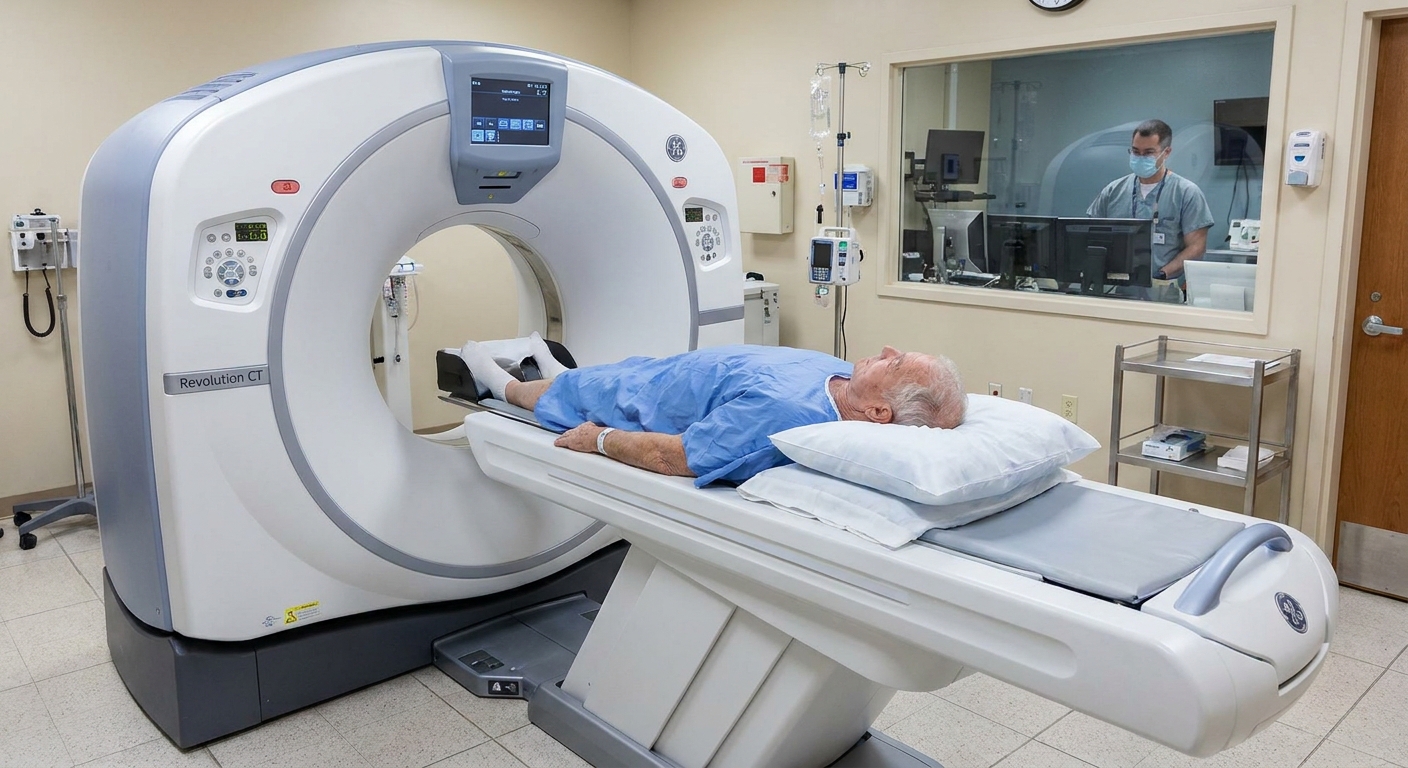
CT details can also shape interpretation. For suspected stones, many emergency departments use non-contrast CT because it is highly sensitive for most stones. For infection or complications, clinicians may use contrast CT to look at kidney enhancement patterns and possible collections. Reports may phrase the finding as “perinephric fat stranding” or “perirenal edema”, and those are often describing a similar idea.
Mild stranding can be incidental
Sometimes CT reports mention mild stranding when the overall story is not worrisome. Mild, even bilateral, stranding can be nonspecific and may not represent a serious problem by itself. It needs to be interpreted alongside symptoms, urine testing, and other CT findings. Radiologists are trained to describe what they see even when it may not change management.
When it is more concerning
Most cases end up being related to stones or uncomplicated infection. Still, there are times when this CT finding, plus your symptoms, should trigger quicker evaluation.
Get urgent care now if you have
- Fever (especially with flank pain), chills, or signs you are getting sicker
- Severe pain that is not controlled with prescribed medication
- Persistent vomiting or you cannot keep fluids down
- Confusion, weakness, fainting, or very low blood pressure
- Decreased urine output or trouble urinating
- A known kidney stone plus fever, which can signal infection behind an obstruction
- Pregnancy with urinary symptoms or flank pain
- One kidney or a kidney transplant and new flank pain or fever
As a rule, infection plus blockage is the combination clinicians take very seriously because it can escalate quickly.
What happens next
Your next steps depend on the suspected cause and how you feel, not just the CT wording.
If a stone is suspected
- Pain control and anti-nausea medication when needed
- Hydration guidance tailored to you (more is not always better if you are vomiting or have kidney or heart issues)
- Medical expulsive therapy in some cases, such as tamsulosin, especially for ureteral stones
- Straining urine to catch the stone for analysis if your clinician recommends it
- Urology follow-up if the stone is large, not moving, or you have repeated episodes
If infection is suspected
- Urinalysis and urine culture to confirm and target treatment
- Antibiotics and clear safety-net instructions about worsening symptoms
- Re-evaluation if symptoms are not improving within the expected timeframe
If the report raises concern for a collection
If your CT mentions an abscess, urinoma, hematoma, or another organized fluid collection, your clinician may recommend:
- More specific imaging
- Specialist evaluation (often urology)
- Antibiotics, drainage, or hospital care depending on the size of the collection and your symptoms and vital signs
Questions to ask
If you are staring at a CT report and feeling stuck, these questions can help you get clear answers fast.
- “Do you think this stranding is from a stone, infection, or something else?”
- “Did the CT show an obstructing stone or hydronephrosis?”
- “What did my urine test show, and was a culture sent?”
- “Do I need antibiotics, and if so, for how long?”
- “What symptoms would mean I need urgent care?”
- “Do I need a urology referral or repeat imaging?”

FAQ
Can perinephric stranding be normal?
It is not typically described as “normal,” but mild stranding can be nonspecific and may not represent a serious problem by itself. It needs to be interpreted alongside symptoms, urine testing, and other CT findings.
Does perinephric stranding mean kidney cancer?
Perinephric stranding does not automatically suggest cancer. Radiology reports usually describe masses or suspicious lesions directly. If your report mentions a mass, lesion, or abnormal enhancement, that is a separate conversation than stranding alone.
If no stone is seen, can it still be a stone?
Yes. A stone may have already passed, may be very small, or may be missed because of motion or artifact. In rarer cases, certain medication-related stones can be harder to see. Also, the answer can depend on what kind of CT was done. Non-contrast CT is highly sensitive for most stones, so when no stone is seen, clinicians lean more heavily on the rest of the picture (symptoms, urine, and whether there is hydronephrosis).
Is perinephric stranding the same as a kidney infection diagnosis?
No. It is a radiology finding that can be seen with kidney infection, but also with stones and other causes. A kidney infection diagnosis is usually based on symptoms and urine testing, with imaging used when needed.
How long does stranding last after a stone?
There is not one universal timeline. Inflammation can linger after a stone passes, especially if there was significant irritation or temporary blockage. Clinicians focus more on whether symptoms are improving and whether there are any warning signs of infection or ongoing obstruction.
A reassuring takeaway
Perinephric stranding is best thought of as a CT “weather report” around the kidney. It suggests irritation, inflammation, or edema in the fat near the kidney, which is most commonly linked to kidney stones, a recently passed stone, or infection. It is different from hydronephrosis, which is swelling of the kidney’s internal collecting system, and it is different from a true fluid collection.
If you have your report in front of you, focus on the full picture: your symptoms, your urine test results, and whether the CT mentions a stone, hydronephrosis, a collection, or a mass. And if you have fever, worsening pain, or vomiting, it is worth getting evaluated right away.