When I’m teaching someone how to live with a urinary stoma, the first thing I try to do is take the mystery out of it. If you or someone you love has been told they have an ileal conduit, it can sound intimidating. In reality, it is a very practical rerouting of plumbing: a short piece of small intestine becomes a passageway that lets urine leave the body after the bladder has been removed or no longer works.
It is also fair to say this up front: getting an ileal conduit is usually part of major surgery. The learning curve can feel steep at first. The encouraging part is that the day-to-day routine becomes manageable for most people with repetition and the right support.
This article focuses on the conduit itself, the stoma, and everyday life with the pouch system.
What an ileal conduit is
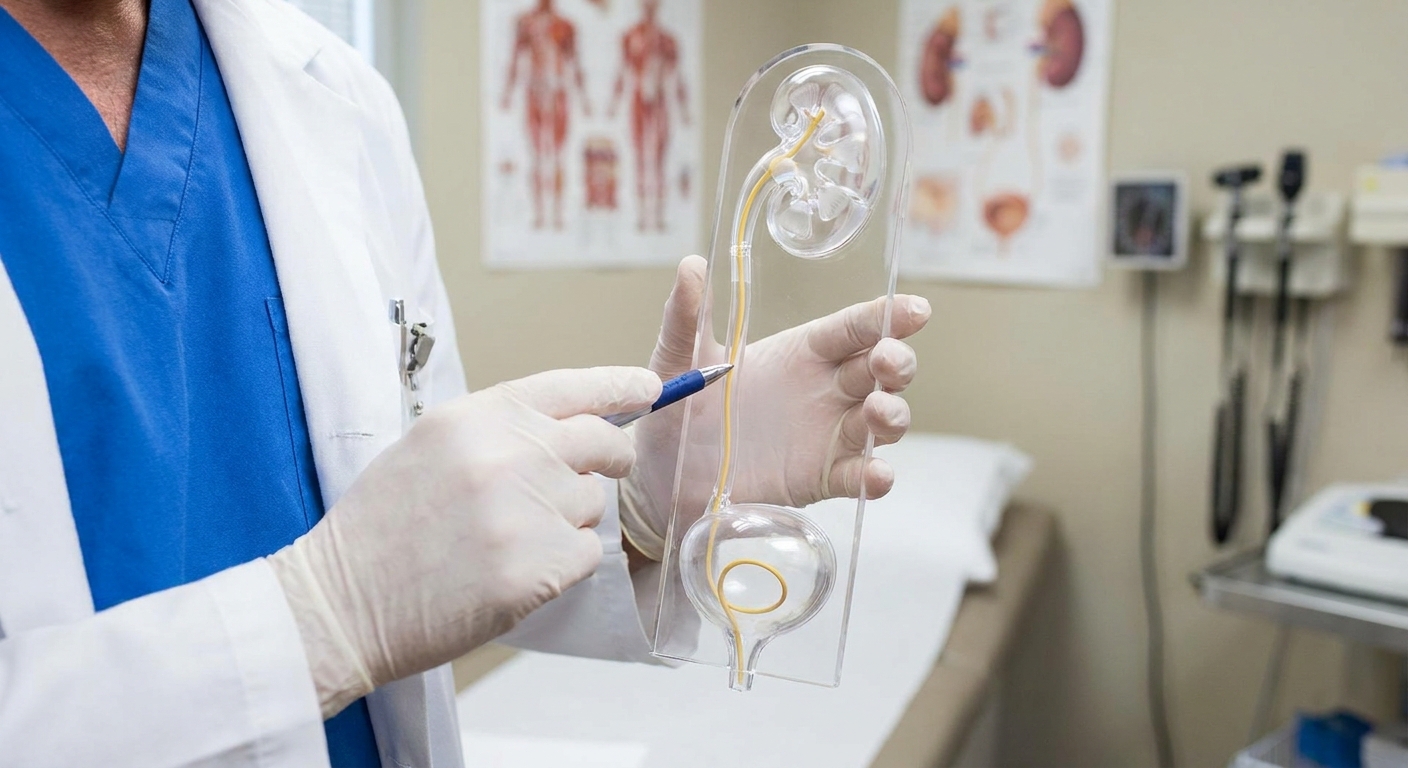
An ileal conduit is a type of urinary diversion. Surgeons take a short segment of the ileum (the last part of the small intestine), isolate it to use as a tube for urine, and then reconnect the remaining bowel so digestion continues as usual.
Here is the basic pathway:
- Ureters (the tubes from the kidneys) are connected to one end of the ileum segment.
- The other end of that segment is brought through the abdominal wall to create a stoma (an opening on the belly).
- Urine drains continuously out of the stoma into an external pouch secured to the skin with a barrier wafer or baseplate.
Because there is no bladder to store urine, an ileal conduit drains all the time. That constant flow is expected.
What the stoma should look like
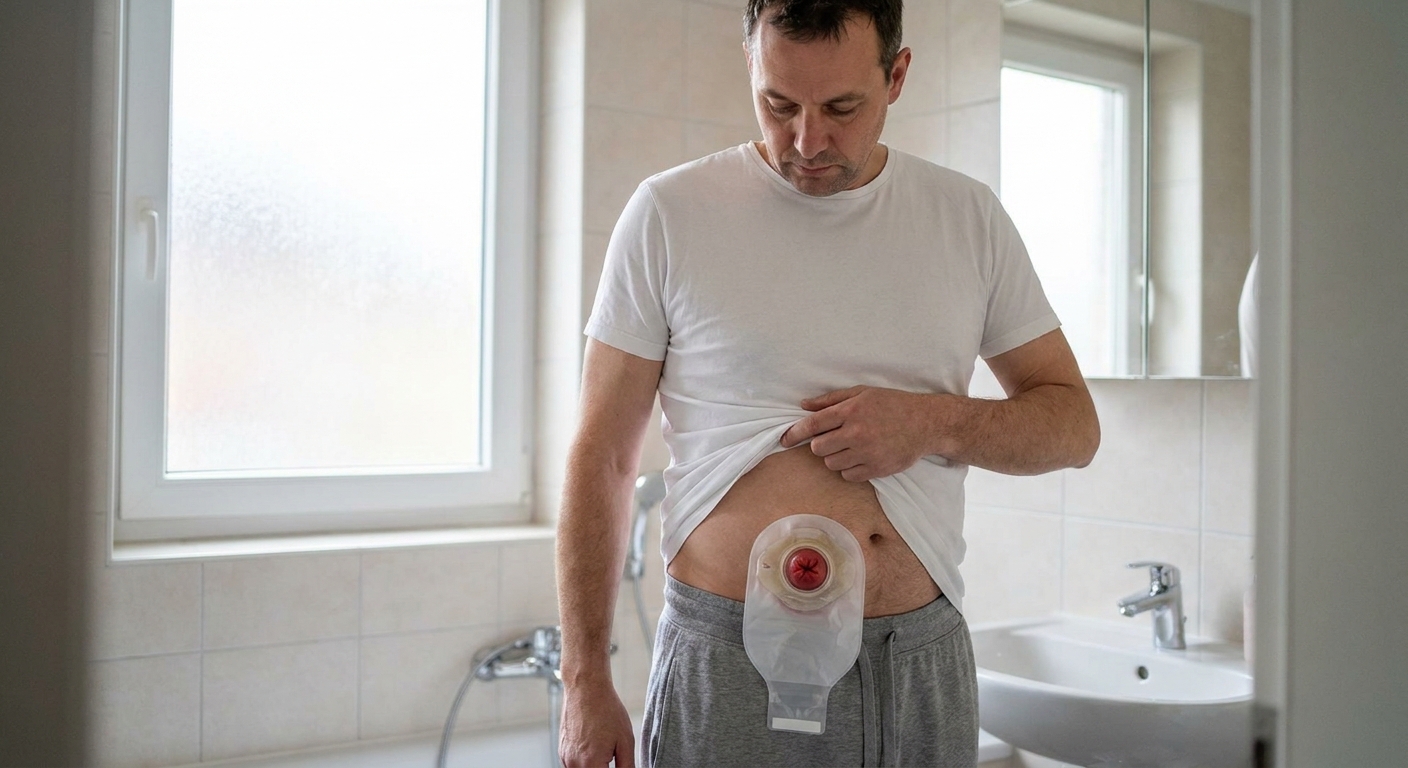
A healthy stoma is usually pink to red, moist, and may look a bit like the inside of your cheek. The stoma tissue typically has far less pain sensation than skin, so gentle cleaning is usually not painful. That said, some people feel pressure or sensitivity, and the skin where the stoma meets skin (and the surrounding peristomal area) can become tender if irritated.
Stomas vary in size and shape. Some sit more flush with the skin, while others protrude. Both can work well, but the pouching system may need to be tailored to your body and any creases or scars.

The external pouch
The pouch (also called an ostomy bag) collects urine as it drains. It is secured with a skin barrier wafer or baseplate that seals to the skin so urine goes into the pouch instead of onto the peristomal skin.
Emptying the pouch
Most people empty the pouch when it is about one-third to half full. Waiting until it is very full can lead to leaks because the weight pulls on the seal.
Changing the pouching system
Change schedules vary by person and product, but many people change the wafer and pouch every few days. The goal is a strong seal with healthy skin, not “as long as possible.” If you notice itching, burning, or frequent leaks, it is a sign the fit or routine needs adjusting.
Odor and discretion
A properly sealed system should not smell. Odor tends to show up when there is a leak, when the outlet is not cleaned well after emptying, or if the pouching system is overdue for a change.
Mucus in the urine
Seeing mucus strands in the urine is one of the most common surprises with an ileal conduit. It can look like cloudy threads, jelly-like strings, or small clumps.
This happens because the segment of intestine used for the conduit still behaves like intestine. Intestinal tissue naturally makes mucus to protect itself. When that tissue becomes a urine pathway, it continues producing mucus, and the mucus comes out with the urine.
In most cases, mucus is expected. It may be heavier early on after surgery and often becomes less noticeable over time, although many people always see some.
Call your clinician if mucus is accompanied by symptoms that suggest infection or blockage, such as fever, flank pain, foul-smelling urine, new confusion (especially in older adults), or very low urine output.
Night drainage
Because an ileal conduit drains continuously, many people use a night drainage system so they do not need to wake up repeatedly to empty the pouch.
How it usually works
- Your pouch outlet connects to a longer tube.
- The tube drains into a larger bedside container.
- The container is kept below the level of the stoma so urine flows downhill by gravity.
Tips to prevent leaks and backflow
- Avoid kinks in the tubing. A kink can cause urine to back up and overfill the pouch.
- Keep the bedside container lower than your abdomen (for example, in a wastebasket next to the bed).
- Secure the tubing so you do not tug on it when you roll over.
- Check connections so the adapter is fully seated and not partially disconnected.
- If your system has an anti-reflux valve or venting feature, use it as directed by the manufacturer or your ostomy nurse.
- Do not let the drainage container tip or rise above stoma level during the night.
If you are getting frequent nighttime leaks, it is worth troubleshooting with a wound, ostomy, and continence nurse (often called a WOC nurse). In my clinic experience, the fix is often a small change in fit, tubing setup, or routine.
Stoma and skin care
With an ileal conduit, the skin around the stoma does a lot of work. The most important goal is to keep urine off the skin and maintain a reliable seal.
Daily skin check
When you empty or change your pouch, look at the skin around the stoma. Healthy skin should look like the rest of your abdominal skin. Mild redness right at the edge can happen, but persistent irritation is a sign something needs adjusting.
Cleaning
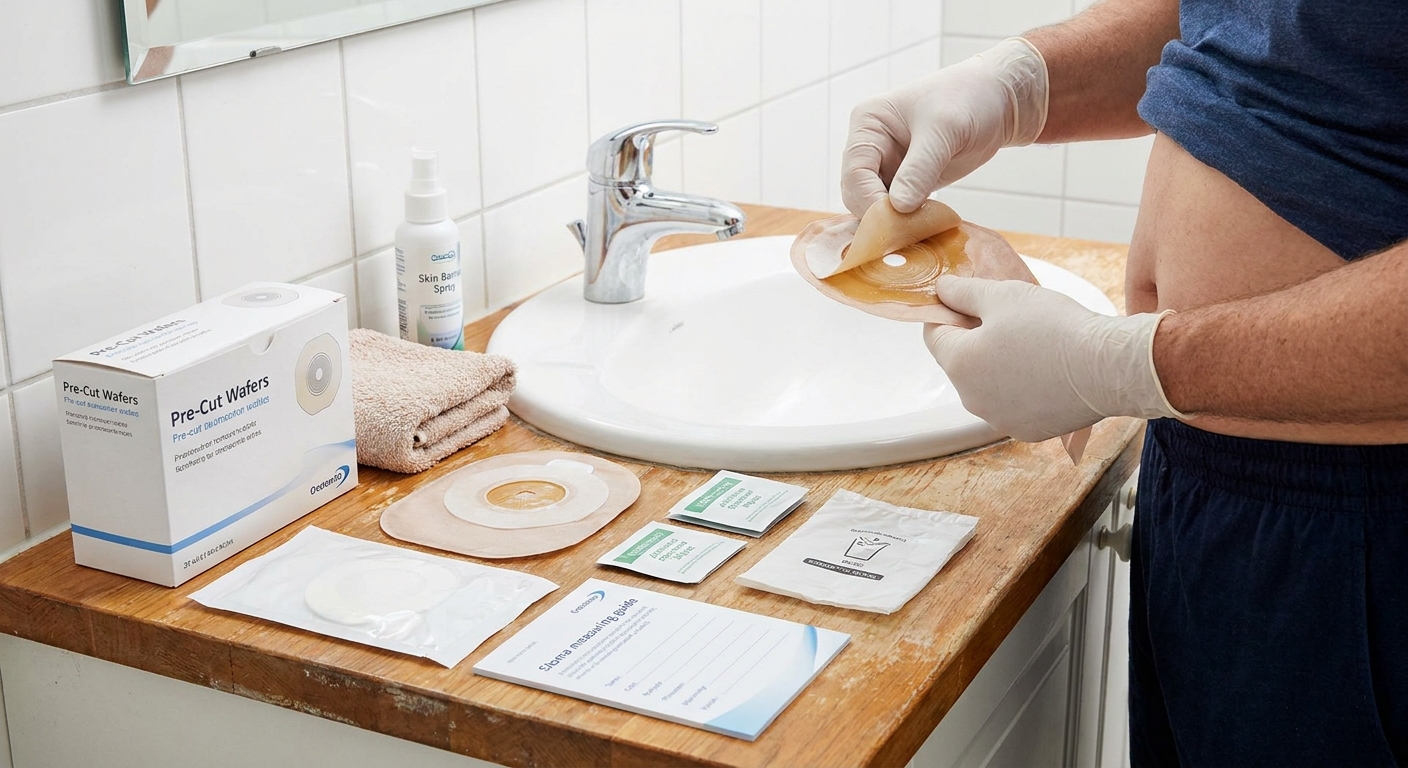
- Use warm water and a soft cloth or gauze.
- Soap is optional. If you use it, choose something gentle and rinse well. Some soaps and lotions can interfere with adhesion.
- Pat the area fully dry before applying the barrier.
Getting the fit right
The opening in the skin barrier should fit snugly around the stoma without squeezing it. Too large an opening leaves skin exposed to urine. Too small can rub the stoma and contribute to bleeding or swelling.
Stoma size can change, especially in the weeks to months after surgery. Re-measuring periodically is normal and smart. I often tell patients to re-measure whenever they notice a change in leakage pattern, itching, or a new gap at the edge of the barrier.
Common skin issues to ask about
If the skin is not improving with basic fit adjustments, ask your clinician or WOC nurse whether you might be dealing with:
- Contact dermatitis (reaction to adhesives, wipes, or frequent stripping)
- Candidiasis (yeast rash, often itchy with a red, satellite-dot pattern)
- Hypergranulation at the mucocutaneous junction (tender, bumpy tissue that can bleed easily)
Hydration and urine output
Hydration matters with an ileal conduit. Adequate fluids help keep urine flowing, reduce the chance of thick mucus plugs, and support kidney health.
I usually coach people to aim for steady, consistent intake across the day unless their clinician has told them to limit fluids (for example, with certain heart or kidney conditions). Practical signs you may need more fluids include lower-than-usual output, urine that looks more concentrated, or strong odor. Because conduit urine can be mixed with mucus, color alone is not a perfect guide, so pay attention to output trends and how you feel.
If you are unsure what hydration target is right for you, ask your urology team for a personalized goal.
UTIs and kidney infections
It also helps to know this: because urine is constantly passing through a piece of intestine and into a pouch, it is common for urine tests to show bacteria even when a person feels well. What matters most is whether you have symptoms.
Seek care for possible UTI or kidney infection if you have fever, chills, new flank or back pain, vomiting, new or worsening confusion (especially in older adults), or you simply feel significantly unwell. If your team asks for a urine sample, follow their instructions, because collection technique with a stoma is different than a typical “clean catch.”
Early after surgery
Many patients go home with temporary ureteral stents that exit through the stoma into the pouch. This can look alarming if you were not expecting it, but it is often a normal, short-term part of healing. Your surgical team will tell you when and how they plan to remove them.
Warning signs
Some changes should be treated as time sensitive, especially early after surgery or anytime you suspect a blockage or poor blood flow to the stoma.
Seek urgent medical care if you notice:
- No urine output from the stoma, or a sudden major drop in output, especially if you feel unwell, nauseated, or have abdominal or flank pain.
- A stoma that turns dark red, purple, brown, gray, or black, or becomes cold and dusky looking.
- Severe bleeding from the stoma or blood clots in the pouch (a small spot of blood after cleaning can happen, but ongoing bleeding is not typical).
- Fever, chills, or shaking, especially with back or flank pain.
- Signs of dehydration such as dizziness, dry mouth, unusual fatigue, and lower output than your norm (some people also notice more concentrated, stronger-smelling urine).
- Rapidly worsening skin breakdown, open sores, or a painful rash around the stoma.
If you are unsure, it is always appropriate to call your surgical team, urologist, or ostomy nurse. In my clinic experience, early calls prevent bigger problems later.
Ileal conduit vs neobladder
These two options can sound similar because they are both urinary diversions, but daily life is often quite different.
Ileal conduit
- Urine drains continuously through a stoma into an external pouch.
- No need to “hold” urine or urinate through the urethra.
- Routine focuses on pouching, skin care, and drainage management.
Neobladder
- Surgeons create an internal reservoir from intestine and connect it to the urethra.
- Many people urinate in a more typical way, but often need to retrain pelvic muscles, follow timed voiding, and sometimes use catheterization if emptying is incomplete.
- No external pouch, but a different set of risks and a different learning curve.
Your best option depends on your anatomy, cancer or disease factors, kidney function, dexterity, and personal priorities. If you are choosing between diversions, ask your surgeon and a WOC nurse to walk you through what day-to-day life looks like for each one.
Surgery vs daily living
People often hear “ileal conduit” in the same conversation as radical cystectomy (bladder removal). The surgery and the diversion are connected, but it can help to separate them:
- The day of cystectomy surgery is about the operation, anesthesia, hospital recovery, pain control, and preventing complications like blood clots or infections.
- Living with an ileal conduit is about long-term routines: pouching, skin protection, hydration, supplies, sleep setup, and knowing what changes are expected versus concerning.
If you are still in the hospital or recently home, it is normal to feel like there is too much to learn at once. Most people do not feel confident in the first week. Skills build quickly with repetition.
Life and activity
Most people can return to many of the activities they value, but timing matters. Follow your surgeon’s guidance on lifting limits and core strain, especially in the early weeks when the risk of a parastomal hernia is higher.
Travel is usually very doable with planning. I suggest carrying extra supplies in your hand bag, packing more than you think you need, and bringing a small disposal plan for changes on the go.
Intimacy and body image changes are real, and they deserve attention just like skin care does. If you feel stuck, a WOC nurse, counselor, or sexual health specialist can help you problem-solve in a way that respects your body and your relationship.
Common questions
How much urine should I see?
It varies by body size, kidney function, medications, and hydration. What matters most is your usual pattern. A sudden major drop in output, especially with pain, fever, nausea, or a swollen abdomen, needs prompt evaluation.
Will I always have mucus?
Many people see at least some mucus long term. It is typically harmless. If the mucus is accompanied by foul odor, fever, flank pain, or worsening fatigue, get checked for infection or blockage.
Can I shower with an ileal conduit?
Most people can shower. Some prefer to keep the pouch on, others shower during a change. Specific recommendations depend on your product and skin needs, so follow the plan you and your ostomy nurse create.
What if I keep getting leaks?
Leaks are often a fit issue, not a personal failure. Stoma size changes, uneven skin surfaces, weight changes, and creases can all affect the seal. A WOC nurse can recommend barrier rings, convex wafers, belt support, or a different system.
When to get support
If you are feeling overwhelmed, please know that is common and valid. Beyond your urology team, a wound, ostomy, and continence nurse can be one of the most helpful people in your recovery. They can troubleshoot leaks, protect your skin, and help you find a system that fits your body and lifestyle.
You deserve care that feels practical and humane. With the right setup and support, most people settle into a routine and get back to the parts of life that matter to them.