When I explain kidney conditions to patients, I often start with one simple image: your kidneys are like high-quality coffee filters. They are meant to keep protein (and normally, blood cells) in your bloodstream while letting waste and extra water pass into urine. In focal segmental glomerulosclerosis, or FSGS, some of those tiny filters get scarred, and that scarring can make protein leak into the urine.
FSGS is not one single disease with one single cause. It is a pattern of injury and scarring seen in the kidney’s filters. Understanding why the scarring happened is a big part of choosing the right treatment.

What FSGS means in plain language
The name sounds intimidating, but it is actually descriptive:
- Focal means only some of the kidney filters are affected, not all of them.
- Segmental means only part of an individual filter (a glomerulus) is scarred.
- Glomerulosclerosis means scarring of the glomeruli, the microscopic filtering units in the kidneys.
When these filters are damaged, they can become “leaky.” That leakiness most commonly shows up as protein in the urine, sometimes in large amounts. Over time, FSGS can also lead to reduced kidney function and, in some people, kidney failure.
What the kidneys are doing when FSGS happens
Each kidney contains on the order of about a million filtering units called glomeruli, although the number varies from person to person. Inside each glomerulus are specialized cells called podocytes that help prevent protein from leaking out.
In many forms of FSGS, the initial problem is thought to involve podocyte injury. Once podocytes are damaged or lost, scarring can follow, and protein starts spilling into urine.
This is why you will often hear nephrologists talk about FSGS as a podocytopathy (a podocyte-related disease), especially when they suspect primary FSGS.
Common symptoms and signs
Some people have no obvious symptoms at first and only discover a problem after a routine urine test. Others develop clear symptoms related to heavy protein loss. And importantly, foamy urine or swelling does not automatically mean FSGS. Several kidney conditions can look similar early on, including minimal change disease and membranous nephropathy. Some people also have more than one process at the same time (for example, diabetes-related kidney disease plus a separate glomerular problem).
Signs you might notice
- Swelling (edema), often in the feet, ankles, legs, around the eyes, or in the abdomen
- Foamy or bubbly urine from high protein content
- Sudden weight gain from fluid retention
- Fatigue
- Less urine output or feeling “puffy” overall
Findings on labs
- Proteinuria (protein in urine), sometimes “nephrotic-range”
- Low blood albumin (hypoalbuminemia)
- High cholesterol can occur with nephrotic syndrome
- Rising creatinine or lower eGFR if kidney function is declining
- Blood in the urine can happen, but it is usually not the main feature
When protein loss is heavy enough to cause swelling, low albumin, and often high cholesterol, clinicians call that pattern nephrotic syndrome. FSGS is one possible cause of nephrotic syndrome, but it is not the only one.
Primary vs secondary FSGS
One of the most important steps in caring for FSGS is sorting out whether it is primary (also called primary podocyte disease) or secondary (scarring that happens because something else is stressing or injuring the kidney).
The treatments can be very different. Primary FSGS may respond to immunosuppressive medications. Purely adaptive secondary FSGS typically does not, and the best approach is treating the underlying cause and reducing strain on the kidneys.
Primary FSGS
Primary FSGS is believed to involve an immune-mediated or circulating factor in at least some patients, sometimes described as a “circulating permeability factor,” that injures podocytes. It can come on relatively suddenly and may cause abrupt, heavy proteinuria and full nephrotic syndrome.
Clues that may point toward primary FSGS include:
- Sudden onset of significant swelling
- Nephrotic-range proteinuria
- No clear long-term condition explaining the scarring (for example, no long-standing obesity-related hyperfiltration)
- Biopsy features that fit primary disease, including more diffuse podocyte foot process changes on electron microscopy
Secondary FSGS
Secondary FSGS happens when the kidneys are forced to “overwork” or are injured by another process. The scarring is real, but it is not primarily driven by an immune factor in the same way.
Examples include:
- Obesity-related FSGS: extra body mass can increase pressure and filtration demands on glomeruli over time, leading to scarring.
- Reflux nephropathy (from vesicoureteral reflux): urine flowing backward toward the kidneys in childhood can cause chronic scarring and, later, FSGS-type lesions.
- Reduced nephron number: being born with fewer functioning filters, or losing filters due to surgery or damage.
- Single kidney: people born with one kidney, or those who donate a kidney, can develop hyperfiltration injury in the remaining kidney in some situations. Many live healthy lives, but if added risk factors exist (like obesity or uncontrolled blood pressure), the kidney may develop proteinuria and scarring.
- Drug, infection, or other disease-associated injury that can produce an FSGS pattern on biopsy (management depends on the trigger).
With secondary FSGS, protein in the urine may rise more gradually, and full nephrotic syndrome is not always present.
How FSGS is diagnosed
FSGS usually cannot be diagnosed from symptoms alone. Diagnosis is a step-by-step process that looks at urine, bloodwork, kidney imaging, and often a kidney biopsy.
Urine tests
- Urinalysis can detect protein and sometimes blood.
- Urine protein-to-creatinine ratio (or a 24-hour urine collection) helps quantify how much protein is being lost.
Blood tests
- Creatinine and eGFR to estimate kidney function
- Albumin (often low when protein loss is heavy)
- Cholesterol and triglycerides (may be elevated with nephrotic syndrome)
- Testing for secondary causes when appropriate (for example, diabetes evaluation, autoimmune markers, infection screening), based on your story and exam
Imaging
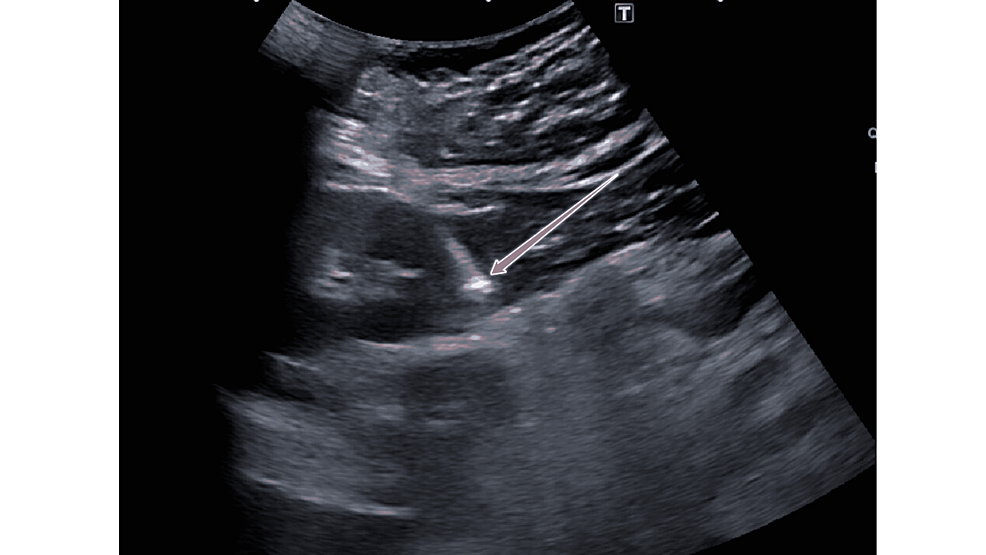
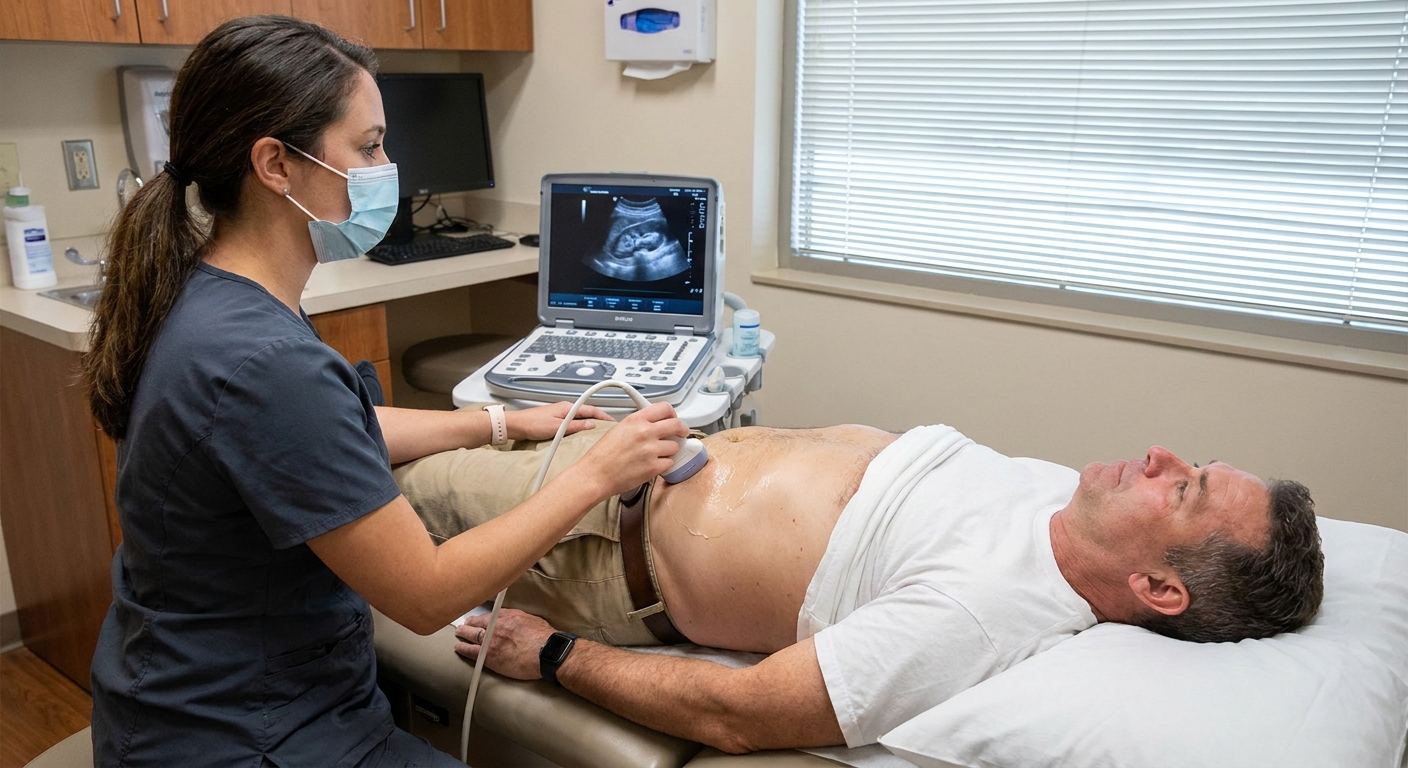
A kidney ultrasound can help evaluate kidney size, structure, and possible scarring or obstruction. Ultrasound does not diagnose FSGS, but it provides helpful context and safety information before biopsy.
Kidney biopsy
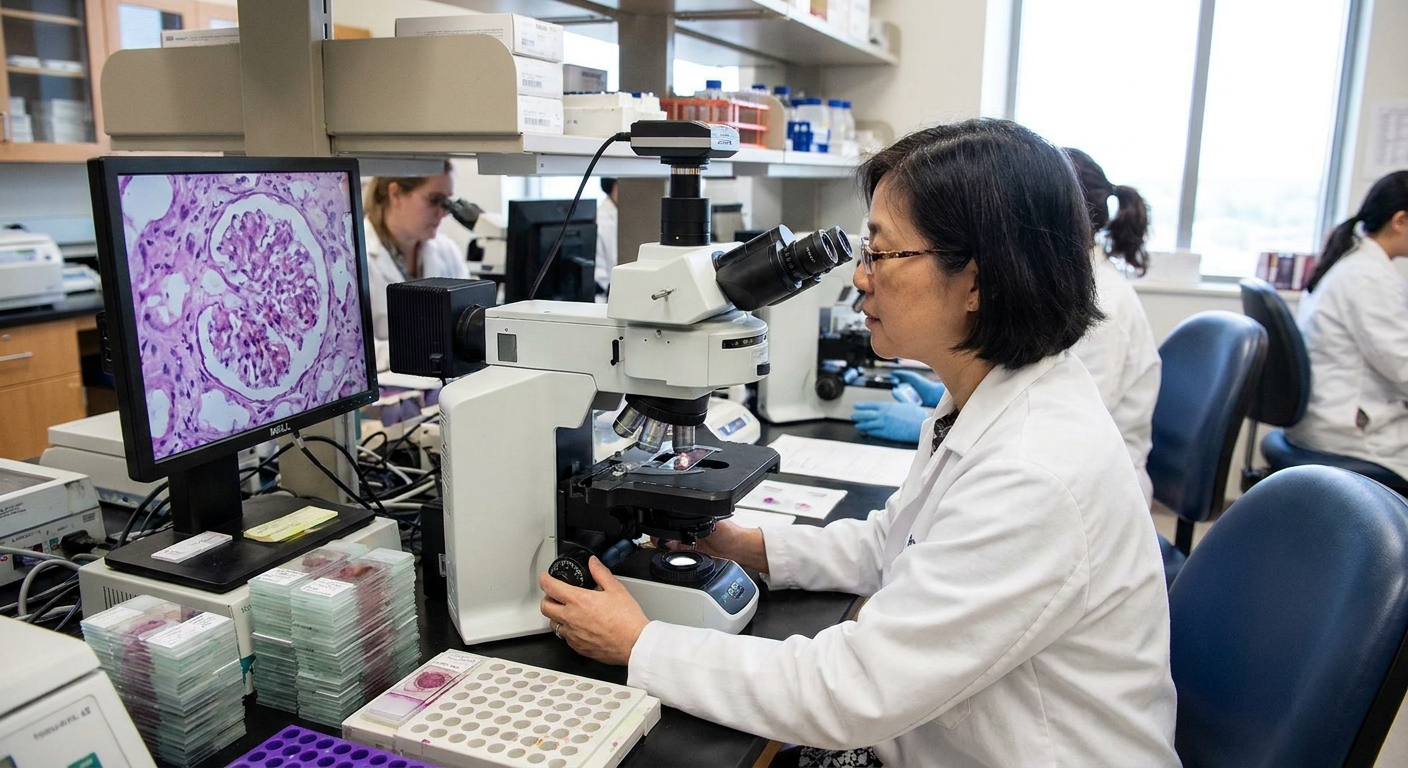
A kidney biopsy is often what confirms FSGS. During a biopsy, a specialist takes a small tissue sample of the kidney (usually through the skin with imaging guidance). A pathologist then examines the tissue under different types of microscopy.
A biopsy can:
- Confirm an FSGS pattern
- Identify specific variants of FSGS (pathology subtypes)
- Look for signs that suggest primary versus secondary disease
- Assess how much chronic scarring is present, which helps with prognosis
Because FSGS lesions can be “focal,” the biopsy sample matters. Sometimes early disease can be missed if the affected glomeruli are not captured, which is one reason nephrologists interpret biopsy results in the context of the whole clinical picture.
Biopsy variants
If you read your pathology report, you may see an FSGS “variant.” These are patterns the pathologist can recognize under the microscope. Variants can correlate with cause, severity, and sometimes treatment response, but they are not the whole story. Your clinical picture still matters just as much.
- Tip lesion: may be more likely to behave like a steroid-responsive podocyte disease in some patients.
- Collapsing: a more aggressive pattern that can be associated with certain infections, medications, or high-risk genetic backgrounds.
- Perihilar: often seen with adaptive or hyperfiltration-related stress (for example, long-standing obesity or reduced nephron mass).
- Cellular: a more active, inflammatory-looking lesion that can overlap with other podocyte injuries.
- Not otherwise specified: a common label when the changes do not fit neatly into the above categories.
Where genetic testing fits in
Genetic testing has changed the way we approach FSGS, especially in children and young adults, and in families where more than one person is affected.
Some cases of FSGS are linked to inherited or spontaneous (de novo) gene changes that affect podocyte structure and function. If genetic FSGS is present, it can shape treatment in very practical ways.
Why genetic testing can change treatment
- Avoiding unnecessary immunosuppression: Many genetic forms of FSGS do not respond well to steroids or other immune-suppressing medications. Knowing it is genetic can spare someone months of side effects without benefit.
- Guiding transplant planning: Primary FSGS has a higher risk of recurring after transplant than many genetic forms in many studies, but recurrence risk varies by person and by how FSGS is defined. Your transplant team will personalize this discussion.
- Family counseling: Results can inform screening and risk discussions for relatives.
APOL1
One genetic factor that deserves specific mention is APOL1. Certain APOL1 risk variants are more common in people with recent West or Central African ancestry and can increase the risk of some kidney diseases, including FSGS-pattern injury.
APOL1 can also matter in transplantation in a unique way. In general, APOL1-related risk is more tied to the donor kidney’s genetics than the recipient’s, so this is something transplant teams think about when evaluating living or deceased donors, and when interpreting recurrence risk.
Who might be offered genetic testing
Testing decisions vary, but it is commonly considered when:
- FSGS occurs in childhood or young adulthood
- There is a family history of kidney disease or FSGS
- The biopsy and clinical course suggest a hereditary podocyte disorder
- There is steroid resistance or an unclear diagnosis
If you are offered genetic testing, it is reasonable to ask what panel is being used, what the results could mean for treatment, and whether genetic counseling is recommended.
Treatment
Treatment depends on the cause (primary vs secondary vs genetic), how much protein you are losing, your kidney function, and what your biopsy shows.
Supportive care
Even before the “big” decisions about immunosuppression, most FSGS care focuses on kidney protection and symptom control:
- Blood pressure control, often with an ACE inhibitor or ARB (these medications can also reduce proteinuria).
- SGLT2 inhibitors may be considered for some people with chronic kidney disease and proteinuria, even without diabetes, depending on individual factors and kidney function.
- Salt restriction to help swelling and blood pressure.
- Diuretics (“water pills”) to manage significant edema.
- Cholesterol management when needed.
- Vaccines and infection prevention considerations, especially if immunosuppressive therapy is used.
A few practical home habits can help people feel less overwhelmed:
- Daily weights if you have swelling, and call your clinician if you are gaining weight rapidly over a few days.
- Be cautious with very high-protein diets unless your nephrologist or dietitian specifically recommends them for you. Protein needs are individualized in CKD.
Treatment for primary FSGS
When primary FSGS is suspected, nephrologists may use immunosuppressive therapy with the goal of stopping ongoing podocyte injury and achieving remission of proteinuria. Options can include:
- Corticosteroids (often first-line in certain situations)
- Calcineurin inhibitors (such as tacrolimus or cyclosporine) in steroid-resistant cases or when steroids are not a good option
- Other immunosuppressive strategies in selected cases, guided by specialist care and individual risk
The response is usually tracked by protein levels in the urine and kidney function over time. The term remission often refers to a major drop in proteinuria, which is strongly linked with better long-term kidney outcomes.
Treatment for secondary FSGS
With secondary FSGS, the focus is on removing the stressor and reducing ongoing strain on the filters:
- Weight management and treatment of metabolic conditions when obesity-related hyperfiltration is part of the picture
- Excellent blood pressure control
- Addressing reflux-related or structural issues when applicable
- Avoiding nephrotoxic medications when possible
One medication group I bring up often is NSAIDs (like ibuprofen and naproxen). Regular NSAID use can reduce blood flow to the kidneys, worsen fluid retention, and in some people is linked to specific kidney injuries that can include a minimal change disease pattern and, less commonly, an FSGS pattern. That does not mean every person with kidney disease must avoid NSAIDs forever, but it does mean you should get individualized guidance before using them regularly.
Immunosuppressive therapy is usually not helpful for purely adaptive secondary FSGS, which is why sorting out the underlying cause is so important.
What to expect over time
FSGS has a wide range of outcomes. Some people achieve remission and keep stable kidney function for years. Others have persistent proteinuria and gradual decline in kidney function. Your outlook depends on several factors, including:
- Degree of proteinuria and whether it improves with treatment
- Kidney function at diagnosis
- Amount of chronic scarring seen on biopsy
- Cause of FSGS (primary, secondary, or genetic)
- Consistency with supportive care (especially blood pressure and proteinuria control)
If kidney function declines significantly, your nephrology team may discuss planning for advanced kidney care, including transplant evaluation. Not everyone with FSGS progresses to kidney failure, but it is wise to stay engaged in follow-up so changes are caught early.
When to seek urgent care
Call your clinician promptly or seek urgent evaluation if you have:
- Rapidly worsening swelling, especially with shortness of breath
- Chest pain, sudden trouble breathing, or coughing up blood (possible blood clot or fluid overload emergency)
- Very little urine output or signs of dehydration while on diuretics
- Fever or signs of infection, particularly if you are on immunosuppressive medication
- Severe headache, confusion, or very high blood pressure readings
People with nephrotic syndrome can have a higher risk of blood clots and infections. If something feels abruptly different or severe, it is worth getting checked.
Questions to ask your nephrologist
Appointments can feel like a blur, especially when you are worried. These questions can help you leave with a clearer plan:
- Based on my story and biopsy, do you think this is primary, secondary, or genetic FSGS?
- How much protein am I losing right now, and what is our target?
- What does my biopsy show about chronic scarring versus active injury?
- Should I have genetic testing or other targeted bloodwork?
- Which medications are meant to reduce proteinuria, and which are meant to treat the underlying cause?
- What side effects should I watch for, and what labs do we need to monitor?
- How often should I check blood pressure at home, and what numbers are too high?
FAQ
Is FSGS the same thing as nephrotic syndrome?
No. Nephrotic syndrome is a pattern of findings (heavy protein in urine, low albumin, swelling, often high cholesterol). FSGS is one possible cause of nephrotic syndrome.
Can FSGS be cured?
Some people reach remission where protein in the urine drops dramatically and stays low. Others have ongoing disease that needs long-term management. Whether it is “curable” depends on the cause and how the kidneys respond to treatment.
Does everyone with FSGS need a biopsy?
Many people do, because treatment choices often hinge on biopsy findings. In some situations, a biopsy may be delayed or avoided due to safety concerns, but that decision is individualized.
If I have secondary FSGS, will steroids help?
Purely adaptive secondary FSGS generally does not improve with steroids in the way primary immune-driven FSGS sometimes can. If the FSGS pattern is tied to a specific drug, infection, or inflammatory trigger, the treatment plan can look different. This is one reason a careful evaluation, often including biopsy and sometimes genetic testing, matters so much.
Can FSGS come back after a kidney transplant?
It can, especially in primary FSGS. The risk varies across studies and across individuals. Many genetic forms have a lower recurrence risk, but transplant teams counsel patients based on the specific clinical scenario and genetic findings when available.
A final word from the clinic
Hearing “scarring in the kidneys” is frightening, and it is normal to jump straight to worst-case scenarios. In my experience, the most empowering next step is getting very specific about the type of FSGS you have and what is driving it. That is where biopsy details and, for many families, genetic testing can make a real difference. With the right diagnosis, the plan becomes clearer, and you and your care team can focus on the steps that most protect your kidneys over the long run.