In my clinic days, one of the most common things I heard from people scheduled for shock wave lithotripsy was not fear of the procedure itself. It was fear of the unknown. What will it feel like? How long will I be there? What is normal afterward, and what is not?
Shock wave lithotripsy, also called extracorporeal shock wave lithotripsy or ESWL, is a way to break certain kidney or ureteral stones into smaller pieces using focused acoustic shock waves from outside the body. No incisions. No scope passed into the urinary tract for the lithotripsy itself. But you should still expect a real recovery period, and a few temporary side effects while those fragments make their way out.
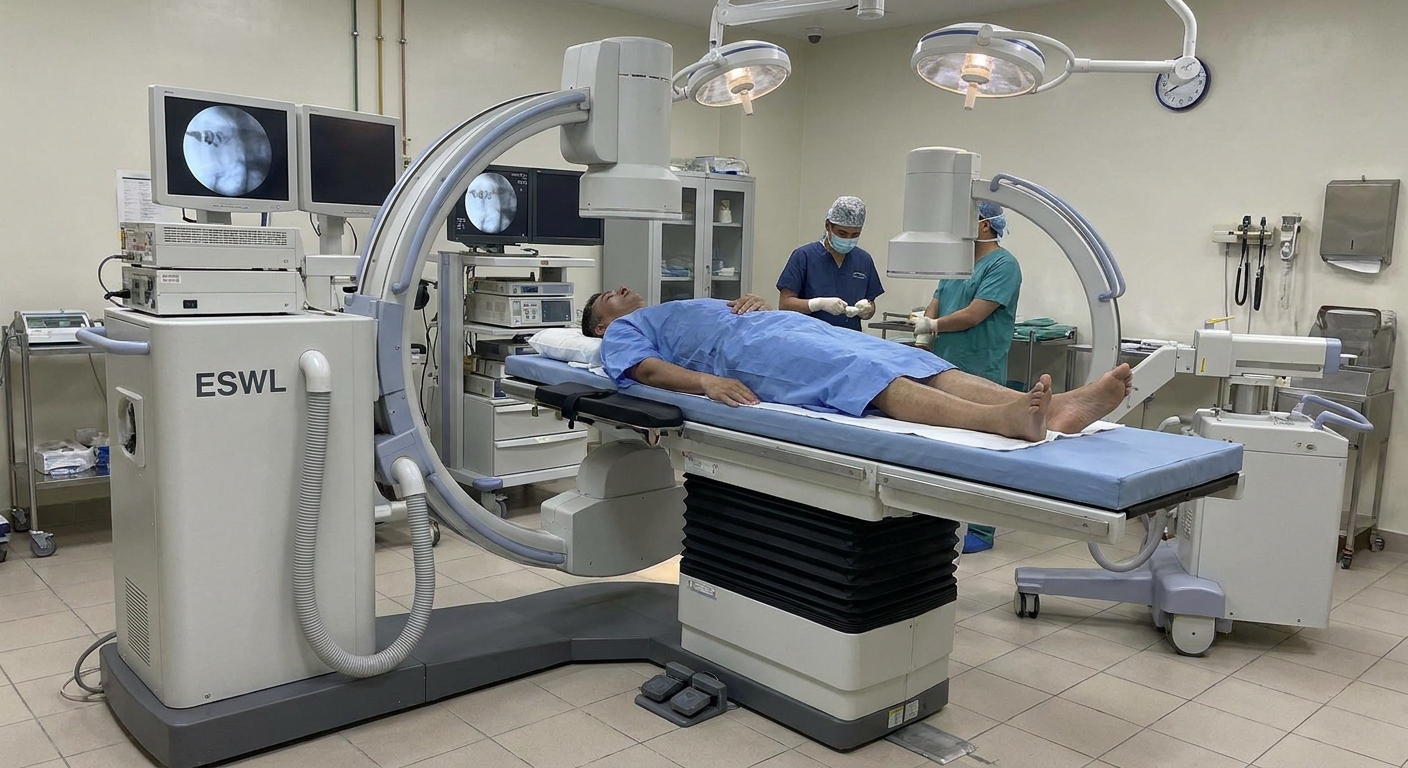
What ESWL is and what it is not
ESWL uses high-energy shock waves that travel through the skin and soft tissue and concentrate on the stone. Think of it like tapping a piece of hard candy repeatedly until it develops cracks and breaks into smaller bits. Those smaller bits can then pass through the urine.
ESWL is different from procedures where a urologist goes in with a scope to grab or laser a stone. With ESWL, the stone is treated from outside your body, guided by imaging.
One important nuance: while the lithotripsy itself does not require a scope in the bladder, some patients have a ureteral stent placed before ESWL, or placed around the same time, to help drainage or lower the risk of blockage from fragments. Your urologist will tell you if that applies to you.
Who tends to be a good candidate
Your urologist makes the final call based on imaging, your symptoms, and your medical history, but ESWL is most often considered when:
- The stone is in the kidney or upper ureter and is visible on ultrasound or X-ray.
- The size is in a favorable range. Many centers get the best results with stones under about 10 mm, and may still consider ESWL up to about 20 mm in selected cases. As stones get larger, success rates drop and the risk of a “traffic jam” of fragments goes up.
- The stone location is favorable. Lower pole kidney stones (stones sitting in the bottom part of the kidney) can be harder to clear because fragments may not drain as easily.
- You can safely receive sedation or anesthesia, depending on how your center performs ESWL.
Stone composition matters too. Some stones are more resistant to shock waves, which can lower success rates. Examples include cystine stones and some harder calcium-based stones like calcium oxalate monohydrate and brushite.
Who is a poor candidate for ESWL
There are situations where ESWL is avoided because it could be ineffective or unsafe. Common examples include:
- Pregnancy, because shock waves can pose fetal risk, and many ESWL setups also use X-ray (fluoroscopy), which involves ionizing radiation. Even if ultrasound targeting is used, ESWL is still generally contraindicated in pregnancy.
- Bleeding risk, such as an untreated bleeding disorder or use of certain blood thinners that cannot be safely held. ESWL can cause bleeding in and around the kidney.
- Active urinary infection. Treating the infection first is important to reduce the risk of worsening infection or sepsis.
- Some anatomic issues that prevent fragments from draining well, which raises the risk of blockage afterward.
- Very large or complex stones where the chance of incomplete fragmentation is high.
- Severe obesity or positioning limitations that prevent accurate targeting, depending on the equipment and the stone location.
If ESWL is not recommended for you, that does not mean there is no solution. It means a different approach is likely to work better or more safely for your specific situation.
What happens before the appointment
Your team will give you instructions tailored to your health history, but these are common expectations:
- Medication review. You will be asked about blood thinners, aspirin, anti-inflammatories, and supplements that can increase bleeding. Do not stop prescribed medications unless the prescribing clinician and your urology team tell you exactly when and how.
- Fasting. If you are receiving sedation or anesthesia, you will usually be told not to eat or drink for a set number of hours.
- Pregnancy screening for people who could be pregnant.
- Imaging confirmation to ensure the stone is still present and in a treatable position.
- A ride home. If you receive sedation or anesthesia, you should plan on someone driving you home.
You may also be asked for a urine test shortly before treatment. Antibiotics are not automatically required for everyone, but they may be prescribed if your urine testing suggests infection or if you are higher risk.
What the ESWL session is like
How the stone is targeted
Stones are typically located using X-ray (fluoroscopy), ultrasound, or both. The goal is to line up the shock wave focus with the stone as precisely as possible. Your team may reposition you during the procedure to keep the stone in the best line of sight.
What you will feel
Experiences vary by center and by person. Some people receive general anesthesia, some receive IV sedation, and some receive pain medication with lighter sedation. Even with good pain control, it is common to feel:
- Rhythmic tapping or thumping on the side or back where the stone is
- Pressure
- Occasional sharper zings if the stone is difficult to target or if shock waves hit a sensitive spot
If you are uncomfortable, tell the team. They can often adjust positioning, pause briefly, or modify pain control.
How long it takes
The shock wave portion often takes about 30 to 60 minutes, though the total time at the facility is usually longer. Plan for extra time for check-in, IV placement, imaging, recovery monitoring, and discharge instructions. Many people are at the center for a few hours total.
Same-day vs overnight
Most ESWL is outpatient. You go home the same day once you are awake, stable, and able to drink and urinate. An overnight stay is less common, but may be recommended if you have complex medical issues, uncontrolled pain or nausea, a higher risk of infection, or if your team wants closer monitoring.
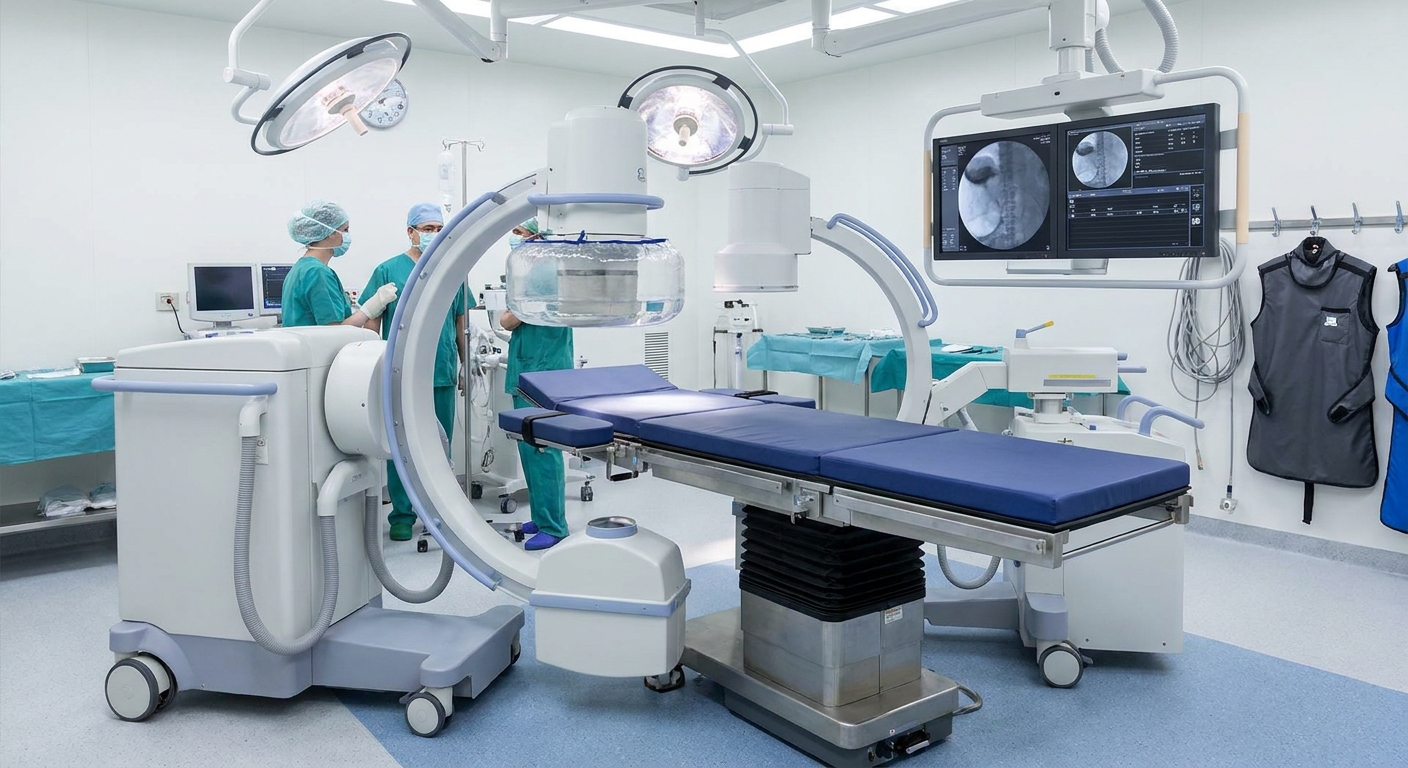
What to expect after ESWL
Blood in the urine
Seeing pink, red, or tea-colored urine is very common for the first day or two. ESWL can irritate the kidney and urinary tract lining as fragments start moving. It should gradually lighten.
Call urgently if you have heavy bleeding, large clots, or urine that stays bright red and does not improve, especially if you feel lightheaded or cannot keep fluids down.
Skin bruising and soreness
Because the shock waves pass through the skin, some people develop bruising, tenderness, or a sunburned feeling on the side where the stone was treated. This is usually mild and temporary.
Cramping as fragments pass
As the stone breaks into pieces, those pieces have to exit through the ureter. That is where many people feel the most discomfort. You might notice:
- Intermittent flank pain that comes in waves
- Bladder pressure
- More frequent urination
- A burning feeling with urination
Your urologist may prescribe pain medication and sometimes an alpha blocker (such as tamsulosin) to help relax the ureter and make passage easier in certain cases.
Grit, sand, and small fragments
It can be a little surprising to see what passes. Some people pass sandy grit. Others pass small jagged fragments. You may be asked to strain your urine to catch pieces for analysis, because knowing the stone type helps prevent future stones.
If you have a stent
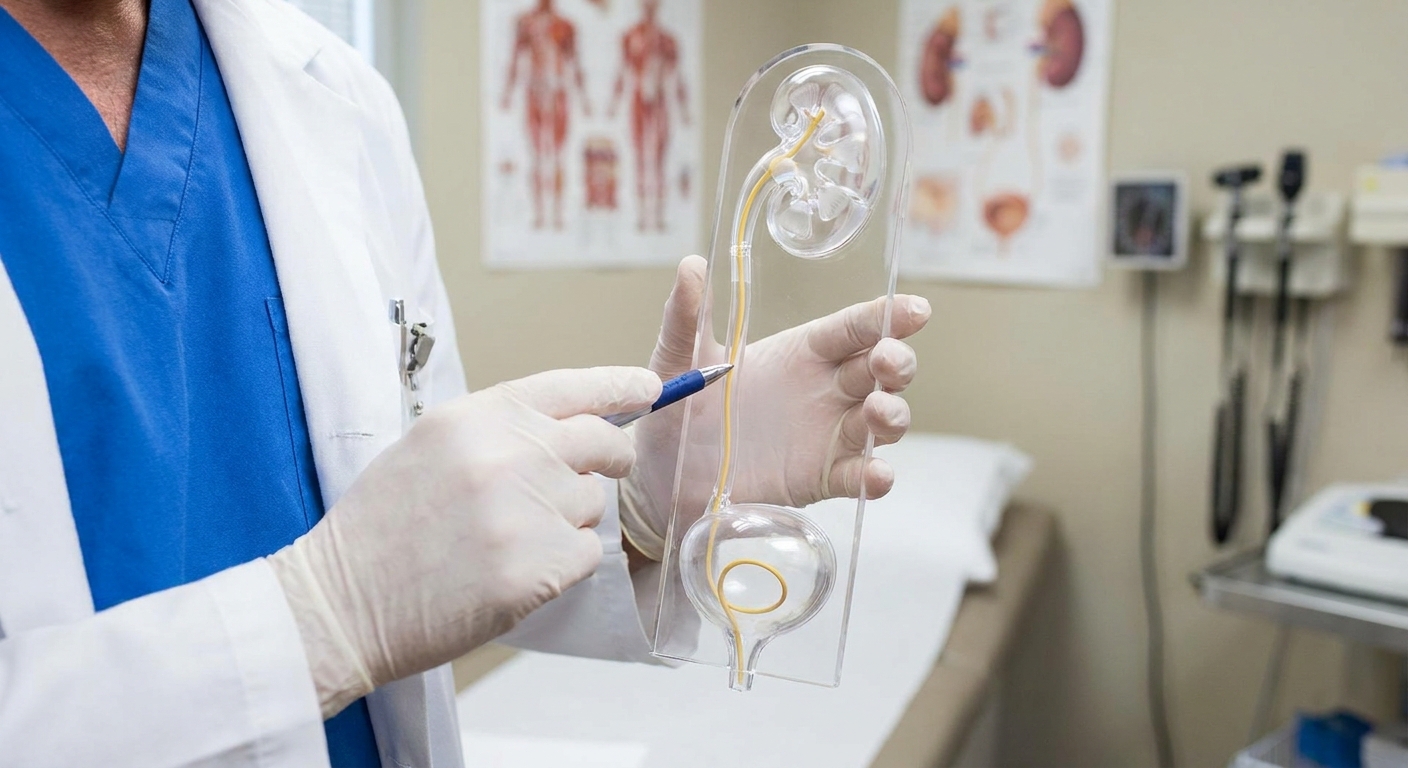
If your plan includes a ureteral stent, it is worth knowing this ahead of time because stent symptoms can mimic stone symptoms. A stent is a small internal tube that helps urine and fragments drain from the kidney to the bladder.
Common stent-related sensations include:
- Urinary urgency and frequency
- Burning with urination
- Bladder pressure
- Flank discomfort that can worsen during or right after you urinate
None of this is fun, but it can be normal. What is not normal is fever, uncontrollable pain, or vomiting that prevents hydration. If you are not sure which category you are in, call.
The stack of fragments problem: steinstrasse
One potential complication after ESWL is a blockage caused by multiple fragments lining up in the ureter. In urology, this is often called steinstrasse, a German term that translates to stone street.
This can happen when a stone breaks into several pieces that do not pass smoothly, creating a traffic jam in the ureter. It is more likely with larger stones or when many fragments are produced.
Symptoms to watch for
- Severe colicky flank pain that does not settle with prescribed medication
- Fever or chills
- Nausea and vomiting that prevents hydration
- Very low urine output, especially if you have one functioning kidney, known obstruction, or stones on both sides
- Worsening pain plus cloudy or foul-smelling urine
This situation needs prompt medical attention. A blocked ureter can cause urine to back up into the kidney, and if infection is present, it can become dangerous quickly.
Recovery timeline
Many people feel ready to do light activities within a day or two, but back to normal depends on how quickly fragments pass and what your follow-up imaging shows.
- First 24 to 48 hours: tiredness from sedation, blood-tinged urine, soreness or bruising, mild to moderate flank discomfort.
- Next several days: on-and-off cramping as fragments pass, especially with activity and hydration changes.
- Over 1 to 4 weeks: passing the last bits can take time. Some people feel nothing, others have intermittent mini stone episodes. In some cases, it can take longer, which is one reason follow-up matters.
If you have a job that is physically demanding, ask your urology team what they recommend for time off. For desk work, many people return fairly quickly, but listen to your body.
How to help fragments pass
Your own discharge instructions matter most, but these general strategies are commonly recommended:
- Hydrate steadily unless you have been told to limit fluids for another condition. A steady flow of urine helps carry fragments out.
- Use pain control early when cramping starts. Waiting until pain is severe can make it harder to get comfortable.
- Stay gently active if you feel up to it. Walking can help movement through the ureter.
- Strain your urine if requested, and bring fragments to your follow-up appointment for analysis.
A practical tip from years of patient education: set a reminder to sip fluids regularly. Many people only drink when pain hits, and that can make cramps feel more intense.

Common restrictions after ESWL
Your instructions may differ, but these are frequent questions I used to hear:
- Driving: if you had sedation or anesthesia, do not drive for at least 24 hours, and do not drive while taking prescription pain medication that impairs you.
- Bathing and showering: ESWL is noninvasive, so showering is usually fine the same day or next day unless your center gives different guidance.
- Work: many people return to desk work quickly. Heavy lifting and strenuous activity may need a short pause, especially if it worsens bleeding or cramping.
- Sex: often as tolerated once you feel up to it, but take it easy if it triggers pain or bleeding.
When to call your urology team right away
After ESWL, do not try to tough it out if something feels off. Seek urgent care or emergency evaluation if you have:
- Fever (especially 100.4°F or 38°C or higher), chills, or signs of infection
- Severe pain not controlled with your prescribed plan
- Persistent vomiting or inability to keep fluids down
- Very heavy bleeding, large clots, or dizziness
- Trouble urinating or very low urine output
These symptoms can signal obstruction, infection, or significant bleeding, which need timely treatment.
Follow-up
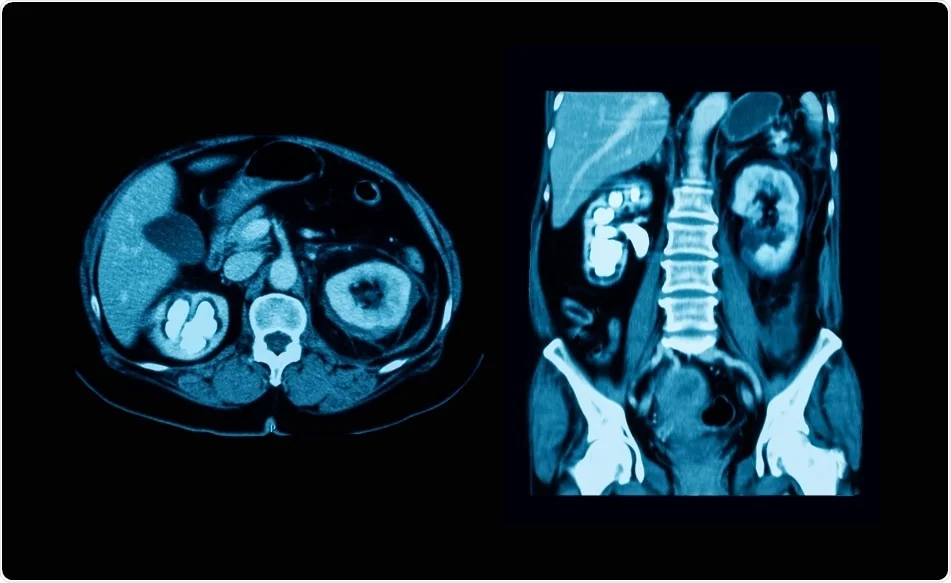
ESWL success is usually judged by a mix of how you feel and what follow-up imaging shows. Your clinician may schedule an X-ray, ultrasound, or CT scan depending on your situation and the type of stone.
Even if you feel better, follow-up is important. A silent fragment left behind can become the seed for a new stone later.
FAQ
Will ESWL get rid of my stone in one session?
Sometimes, yes. Other times, a stone only partially breaks, or breaks but leaves fragments that take time to pass. Some people need more than one treatment session depending on stone size, location, and composition.
Is it normal to feel worse before I feel better?
It can be. The original stone might have been sitting relatively still, while fragments start moving and irritating the ureter. That movement can trigger cramping. Worsening pain should still be discussed with your urology team, especially if it is severe or paired with fever.
How long will I see blood in my urine?
Light bleeding is often most noticeable the first 24 to 48 hours and then fades. If bleeding increases instead of improves, call your clinician.
Can ESWL cause kidney damage?
ESWL can cause temporary bruising in and around the kidney. Serious long-term injury is uncommon when the procedure is appropriately selected and performed, but no procedure is zero risk. Your risk profile depends on your overall health, kidney status, and stone factors. This is one reason candidate selection and follow-up matter.
A final reassurance
Most people do best with ESWL when they prepare for two phases: the treatment day, and then the days to weeks afterward when fragments pass. If you know ahead of time that bruising, blood-tinged urine, and crampy passing days can be part of normal recovery, it is much easier to stay calm and recognize what is truly urgent.
If you are scheduled for ESWL and you are not sure whether your symptoms are expected, call your urology team. You are not bothering anyone. You are doing the smart, safe thing.