In clinic, I have met plenty of people who assume a kidney stone is always a small, jagged pebble that causes a sudden, dramatic attack and then passes. A staghorn calculus is different. It is a large, branching stone that can quietly take over the kidney’s collecting system, cause repeated infections, and damage kidney tissue over time.
If you have seen the term on a scan report or heard it from a urology team, it is normal to feel alarmed. Let’s walk through what a staghorn calculus is, why it is treated differently than typical stones, and what the next steps usually look like.
Staghorn calculus meaning
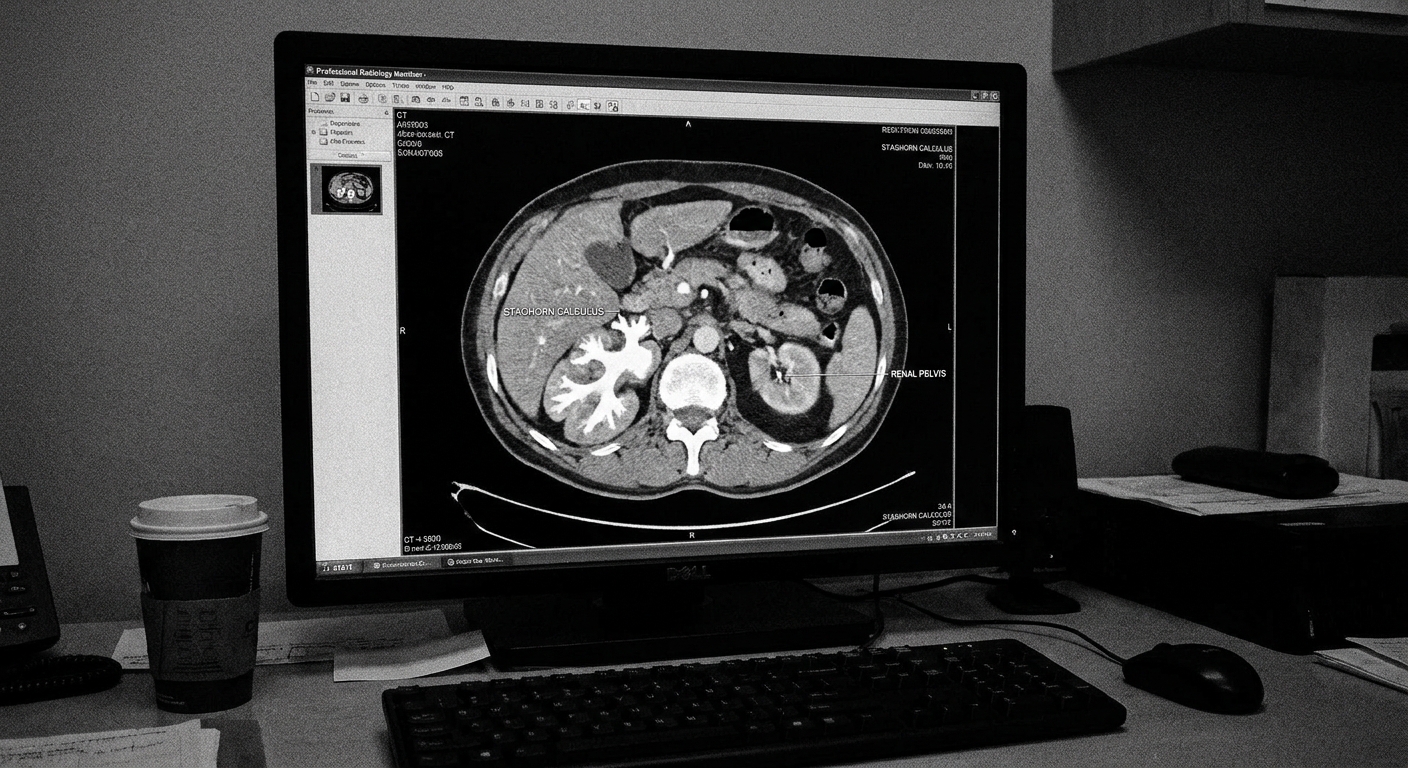
A staghorn calculus is a kidney stone that branches and fills the renal pelvis and calyces. Those are the hollow collecting areas inside the kidney where urine gathers before it drains down the ureter to the bladder.
The name comes from its shape. On imaging, the stone can resemble deer antlers because it extends into multiple calyces.
Partial vs complete staghorn stones
- Partial staghorn calculus: fills the renal pelvis and some, but not all, calyces.
- Complete staghorn calculus: fills the renal pelvis and extends into most or all calyces.
Even a “partial” staghorn calculus can be clinically serious, especially if infection is present.
Why staghorn calculi are often linked to infection
Historically, many staghorn calculi were struvite (magnesium ammonium phosphate) stones that formed in the setting of chronic infection. In modern practice, clinicians also see a meaningful number of mixed or calcium-based staghorn stones, so composition cannot be assumed from shape alone.
Struvite stones often form when there is a urinary tract infection (UTI) caused by urease-producing bacteria. Urease changes the chemistry of urine, making it more alkaline and encouraging crystal formation.
In simple terms: certain bacteria can create urine conditions that help this type of stone grow quickly and branch outward.
Common bacteria involved
Not every UTI causes struvite stones. Classic urease-producing organisms include:
- Proteus species
- Klebsiella species
- Providencia species
- Morganella species
- Staphylococcus saprophyticus (and a few other urease-positive staph)
It can help to know what is not typical. E. coli, the most common cause of uncomplicated UTIs, is usually not urease-producing. That is one reason most UTIs do not lead to struvite stones.
Staghorn stones can also be made of other materials (like calcium phosphate or calcium oxalate), but the infection association is one reason clinicians treat many staghorn calculi with extra urgency.
Why these stones rarely pass on their own
Typical “passing a stone” advice applies to stones that are small enough to move from the kidney into the ureter and down to the bladder. A staghorn calculus usually:
- Is too large to travel through the ureter
- Is anchored in the shape of the collecting system
- Occupies multiple branches (calyces), making it more like a cast of the kidney’s drainage channels than a single pebble
Because of that, a staghorn calculus is generally not something the body can simply “flush out,” even with high fluid intake.
How a staghorn calculus can keep a kidney infected and blocked
One of the biggest medical concerns is that a staghorn calculus can create a cycle that is hard to break:
- Obstruction and urine stasis: The stone can partially block urine outflow, and slow or trapped urine becomes a friendly environment for bacteria.
- Bacterial hiding places: The stone surface can shelter bacteria and biofilm, making infections harder to fully clear with antibiotics alone.
- Recurrent infection: Even if symptoms come and go, bacteria can persist behind the scenes when the stone remains.
- Ongoing inflammation and scarring: Repeated infection and pressure can scar kidney tissue and reduce kidney function over time.
This is why staghorn calculi are often managed as an infected obstruction risk, not as a routine kidney stone.

Symptoms: sometimes obvious, sometimes surprisingly quiet
Some people have strong symptoms, but others have vague or minimal symptoms for a long time, especially if the process is slow and chronic.
Possible symptoms
- Dull ache or heaviness in the flank or back (often on one side)
- Recurrent UTIs or persistent urinary symptoms
- Fever or chills (a red flag for infection)
- Blood in the urine (visible or microscopic)
- Fatigue or generally feeling unwell
When symptoms become urgent
Seek urgent care or emergency care if you have possible kidney stone disease plus:
- Fever (especially 100.4°F or 38°C or higher), particularly if you also have flank pain or are known to have obstruction
- Chills, rapid heart rate, confusion, or weakness
- Severe flank pain with nausea or vomiting you cannot control
- Signs of dehydration, especially if paired with severe pain, vomiting, or fever
- Known kidney stone and you feel acutely ill
An obstructed, infected kidney can become dangerous quickly and needs prompt medical treatment.
How staghorn calculi are diagnosed
Staghorn calculi are most often found on imaging ordered for flank pain, recurrent infections, abnormal kidney function, or an “incidental” finding during evaluation for something else.
Imaging tests commonly used
- CT scan (often non-contrast): very sensitive for defining stone size and location
- Ultrasound: can detect stones and hydronephrosis (swelling of the kidney), though branching detail may be less clear than CT
- X-ray (KUB): may show some stones depending on composition
Other important tests
- Urinalysis and urine culture to look for infection
- Blood tests (kidney function, white blood cell count, and other markers when needed)
- Stone analysis if any fragment is retrieved later, to guide prevention
Why removal is usually done as a procedure
Once a stone fills and branches through the collecting system, it tends to behave less like a “stone you pass” and more like a structural problem inside the kidney. That is why the conversation often moves quickly from diagnosis to planning.
Because these stones are large, branched, and often tied to infection, treatment is typically procedural. Medications alone rarely eliminate a staghorn calculus, and antibiotics by themselves often cannot fully solve the underlying problem if bacteria are protected inside the stone.
Urology teams generally aim to:
- Clear the stone burden as completely as possible
- Control infection before, during, and after treatment
- Protect kidney function and prevent long-term damage
Typical treatment pathways (high level)
Details vary, but common approaches include:
- Percutaneous nephrolithotomy (PCNL): often the main procedure for staghorn stones, sometimes done in stages to fully clear a large stone burden
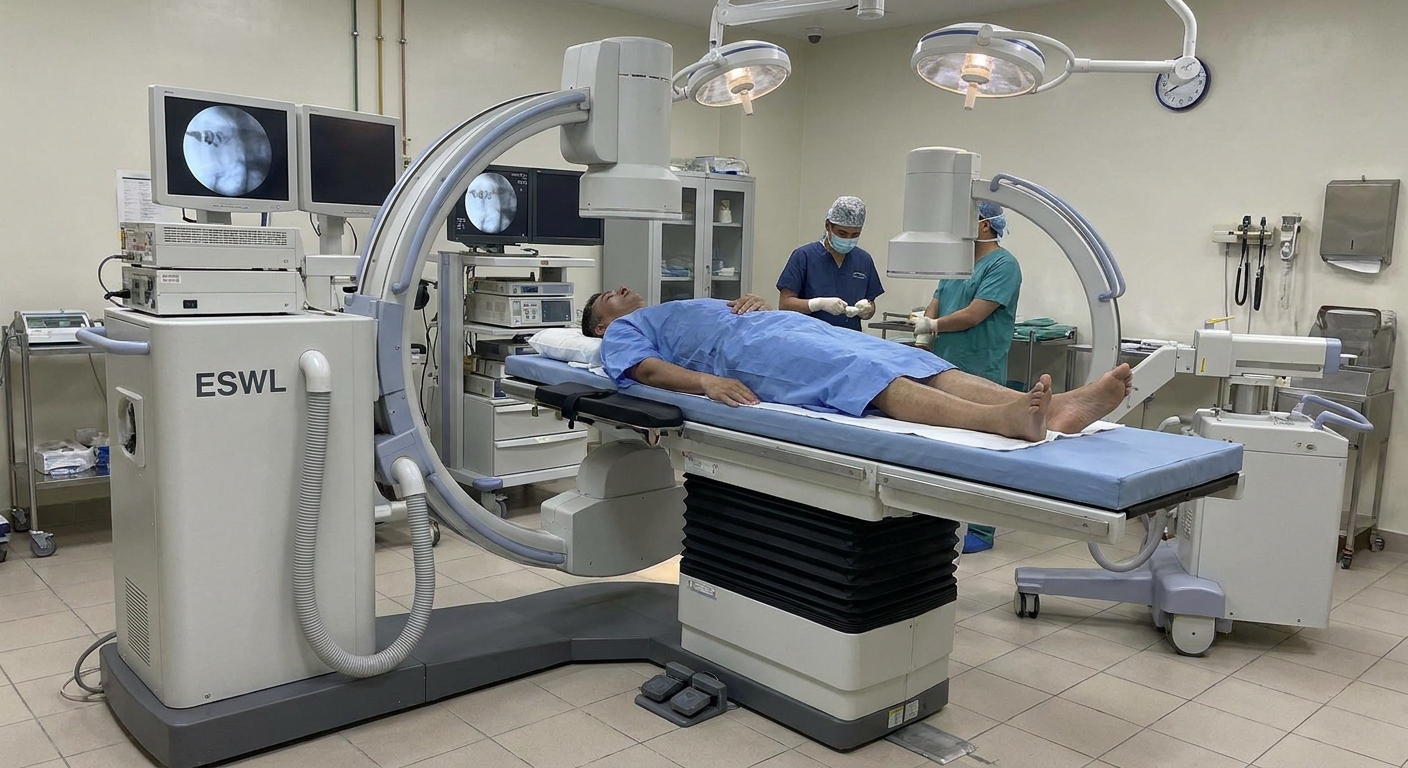
- Combination treatment: PCNL may be paired with ureteroscopy and, in selected cases, shock wave lithotripsy (ESWL) to manage residual fragments
- Urgent drainage if infection and obstruction are suspected: a ureteral stent or nephrostomy tube may be needed first to relieve pressure and control infection before definitive stone removal
- Nephrectomy in select cases: if the kidney is severely damaged and contributing little function, removal of the nonfunctioning kidney may be considered
Your urologist will talk you through what fits your situation, based on stone size, anatomy, infection status, kidney function, and medical history.
What happens if a staghorn calculus is not treated?
Not every patient can have immediate stone removal, and sometimes medical complexity delays treatment. Still, it helps to understand the risks that make clinicians take these stones seriously.
- Recurrent or chronic kidney infections
- Worsening hydronephrosis and pressure-related kidney damage
- Loss of kidney function in the affected kidney over time
- Sepsis risk if infection becomes severe or spreads to the bloodstream
If your care team recommends removal, it is usually because the balance of risk favors actively clearing the stone rather than watching and waiting.
Who is at higher risk?
Staghorn calculi can happen to anyone, but I pay especially close attention when a patient has risk factors that make infections or urine drainage problems more likely, such as:
- Recurrent UTIs
- Neurogenic bladder or difficulty emptying the bladder fully
- Indwelling catheters or frequent catheter use
- Urinary tract abnormalities or prior urinary tract surgery
Having a risk factor does not mean you will develop a staghorn stone, but it can help explain why your urology team is focused on infection control and complete clearance.
Questions to ask your urology team
When you are dealing with a staghorn calculus, clarity matters. Consider asking:
- Is this a partial or complete staghorn calculus?
- Do my urine tests show infection right now, and what organism is involved?
- Is there hydronephrosis or evidence of obstruction?
- How is my kidney function on bloodwork, and is one kidney doing most of the work?
- What is the treatment goal: complete clearance or staged treatment?
- Do you anticipate PCNL, and would it likely be one procedure or more than one?
- What symptoms should prompt an urgent call or ER visit while I am waiting?
- After treatment, what prevention plan do you recommend (cultures, stone analysis, metabolic evaluation)?
Can a staghorn calculus be prevented from coming back?
Prevention depends heavily on what the stone is made of and whether you have ongoing infection risk.
- If it is a struvite stone, prevention usually focuses on preventing UTIs, treating infections promptly, and making sure infections are properly cultured and targeted with the right antibiotic. Clinicians also emphasize complete stone clearance, because leftover fragments can serve as a place for infection stones to regrow.
- If there are mixed or calcium-based components, your clinician may recommend a more complete stone-prevention workup, often including blood testing and a 24-hour urine (metabolic) evaluation, along with personalized dietary and hydration guidance.
One practical point I share often: if you have recurrent urinary symptoms, do not rely on guesswork. A urine culture helps ensure you are treating the correct bacteria and reduces the chance of lingering infection that can contribute to recurrence.
Quick recap
- A staghorn calculus is a large, branching kidney stone that fills the renal pelvis and calyces.
- It is often linked to chronic or recurrent infection, though modern staghorn stones can be mixed or calcium-based.
- It rarely passes on its own due to size and branching shape.
- It can create a cycle of obstruction, urine stasis, persistent infection, and kidney damage.
- Treatment is usually procedural, commonly with PCNL, and may be staged to achieve better clearance.
When to get help right away
If you have a known kidney stone issue and develop fever, chills, severe flank pain, vomiting, confusion, or feel faint, do not wait it out. Those symptoms can signal an infected urinary obstruction, which is an emergency.
If you are not sure whether your symptoms are urgent, it is appropriate to call your clinician’s on-call line or seek emergency evaluation. I would always rather someone be told “you are okay” than miss the window to treat a serious infection early.